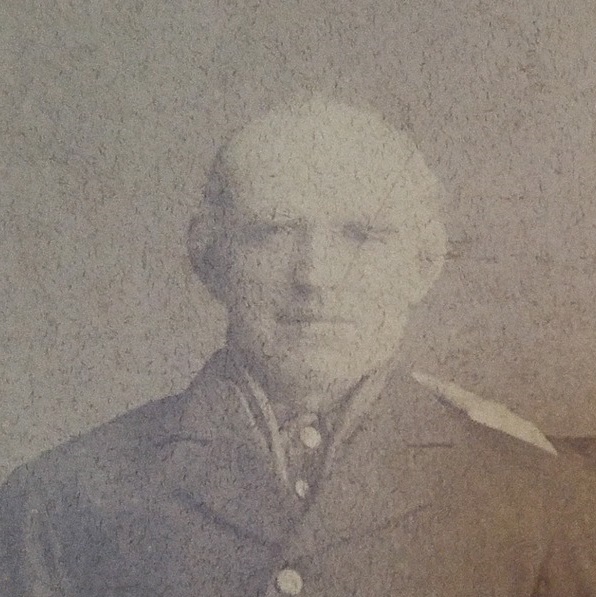
Hugh O'Flaherty
- Born
- 1898-02-28 12:00:00
- Died
- 1963-10-30 12:00:00
- Gender
- Male
- Place of migration
- Stayed in Ireland
Hugh O'Flaherty was born in Lisrobin in County Cork on the 28th of February 1898. He grew up in Killarney where his father was employed as the steward of a golf club. Hugh showed an aptitude for education from a young age and had planned on attending teacher training college when he felt a call to join the priesthood.
Hugh O'Flaherty
In 1922 Hugh was posted to Rome, just as Mussolini was coming to power. He was ordained as a priest three years later. Whilst at the Vatican he completed a degree in theology in just one year. He continued to pursue his studies and was awarded a number of doctorates. His skills saw him being deployed by the Vatican as a diplomat to Egypt, Haiti, Santo Domingo, and Czechoslovakia. After four years of this work he returned to the Vatican and in 1934 was given the title of Monsignor.
Vatican City
n the early years of World War II, Hugh visited a number of prisoner of war camps and reported back to family members to reassure them that their imprisoned loved ones were alive. After Mussolini's power came to an end, a large number of prisoners of war were released, but the encroaching powers that be in Nazi Germany had other plans. The released prisoners were now at an extremely high risk of being captured by the Nazis. Many of them sought the aid of the Vatican, specifically the Irish Embassy there as this was the last remaining English speaking embassy in Europe at the time. Hugh enlisted the help of a number of other clergymen and workers at the Irish Embassy to hide some 4,000 prisoners of war in various monasteries and apartments. These escaped prisoners were anti-fascists, aritocrats, Jews, and allied soldiers. One of the people who helped Hugh in his endeavours was famous Irish singer Delia Murphy, who was married to the Irish Ambassador at the time.
The SS were aware that there was a group of renegades concealing prisoners of war, and that their leader was a priest, but they could not arrest Hugh while he was in the Vatican. For this reason he wore a disguise whenever he had to venture beyond the safety of the city-state. The head of the Gestapo in Rome had a white line painted on the ground to make the boundary of the Vatican and declared that if Hugh stepped across this line he would be shot on sight. Yet Hugh was not deterred. He, along with a number of helpers, continued to conceal refugees throughout the years of Nazi occupation.
In 1944 when Rome was liberated by the Allies, there were 6,425 refugee prisoners and Jews alive thanks to the efforts of Hugh and his co-conspirators. The head of the SS in Rome was imprisoned, and Hugh insisted on visiting him regularly throughout the rest of his life. For his valiant efforts he was awarded a CBE and the US Medal of Freedom.
In later life, Hugh's health declined, and after suffering a number of strokes, he returned home to Ireland in 1960 where he died three years later at the age of 65. He is commemorated in Killarney where a statue was unveiled in 2003. His application to become the second Irish person to be named 'Righteous Among The Nations' is still being processed. In 1983 a film called 'The Scarlet and the Black', starring Gregory Peck was released which details the actions of Monsignor Hugh O'Flaherty during the war.
Hugh O'Flaherty Statue
Gregory Peck
ALSO READ