Back to ancestor search
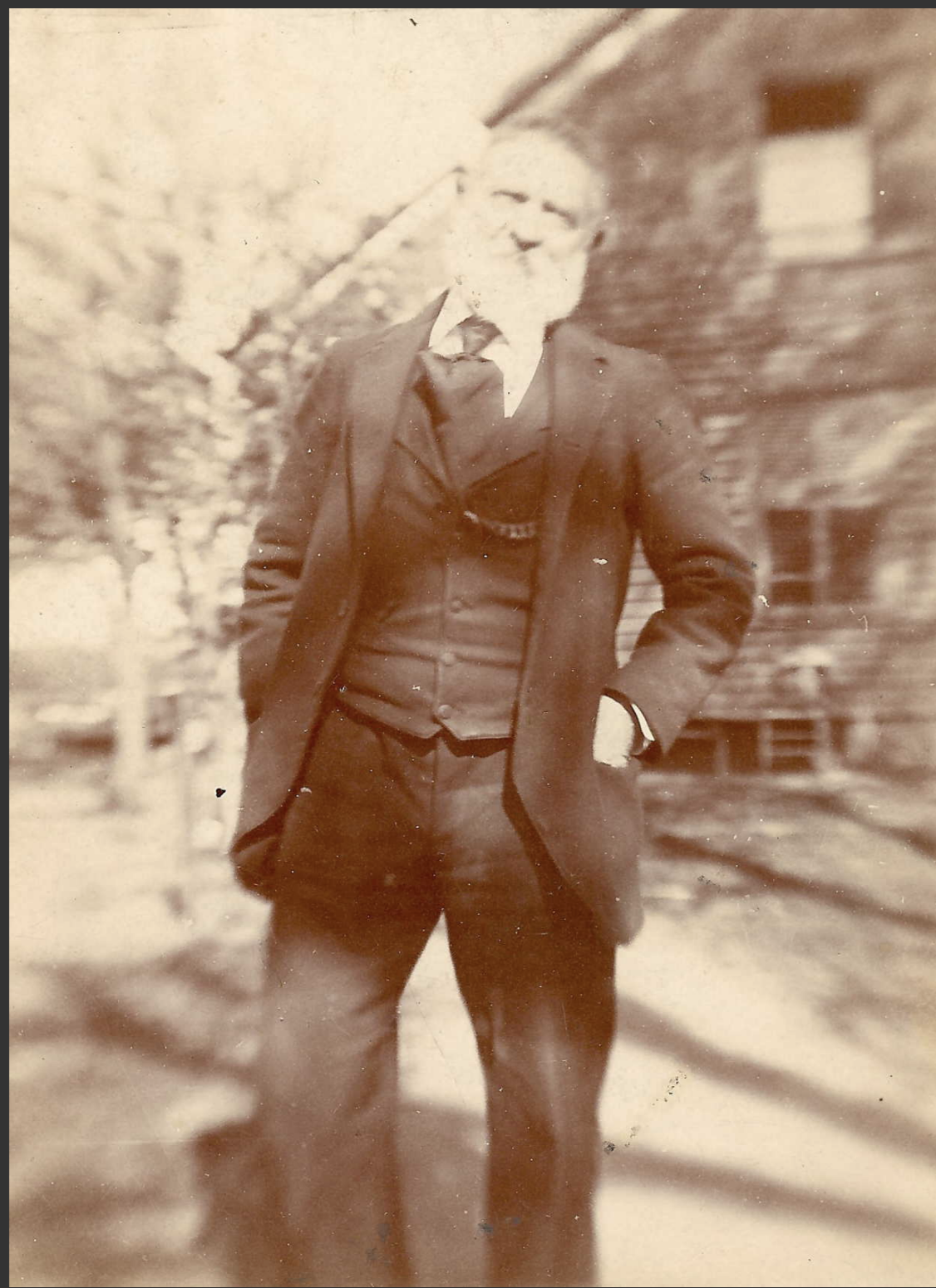
Robert King

Robert King

Born
1804-07-17 12:00:00
Died
1869-10-16 12:00:00
Gender
Male

KING, Hon. Robert (1804-1869), of Rockingham, co. Roscommon

Published in The History of Parliament: the House of Commons 1820-1832, ed. D.R. Fisher, 2009
Available from Cambridge University Press

Constituency

CO. ROSCOMMON

1826 - 1830

Family and Education
b. 17 July 1804, 1st s. of Robert Edward, 1st Visct. Lorton [I], and Lady Frances Harman, da. of Lawrence Harman Harman (formerly Parsons), 1st Visct. Oxmantown [I]. educ. ?Eton 1817; Trinity, Dublin 1823; continental tour 1825-6. m. 7 Dec. 1829, Anne, da. of Sir Robert Newcomen Gore Booth, 3rd bt., of Lissadill, co. Sligo, 2s. 1da. suc. fa. as 2nd Visct. Lorton [I] 20 Nov. 1854; cos. James as 6th earl of Kingston [I] 8 Sept. 1869. d. 16 Oct. 1869.

Offices Held

Sheriff, co. Roscommon 1835-6.

Biography

King’s father, an army officer who once fought an inconsequential duel with his sister’s disreputable lover, was the second son of the 2nd earl of Kingston, on whose death in 1799 he inherited the heavily indebted but subsequently much improved Rockingham estate in Roscommon.1 Having been Member for Jamestown, 1796-7, and Boyle, 1798-1800, he was raised to the Irish peerage as Baron Erris at the Union, which he opposed, and became Viscount Lorton in 1806. His elder brother, the 3rd earl of Kingston, came into the family’s principal estates in county Cork, which was represented during this period by his sons Viscount Kingsborough and Robert Henry King; his younger brothers were Edward, Member for Roscommon in the 1802 Parliament, and Henry, who was returned for county Sligo in 1822. Unlike his relatives, Lorton, who was elected a representative peer in 1822, was an anti-Catholic ministerialist: he wrote to Peel, the home secretary, to condemn the influence of the priests, 26 Feb., and voted against relief in the Lords, 17 May 1825.2 King, who was brought up in a rigidly Evangelical household, celebrated his coming of age at a public dinner in Boyle that July, when it was reported that he would be put up by the unpopular Lorton against the pro-Catholic county Members. From August he travelled in Europe with his father, and on 26 Dec. 1825 he issued an address from Naples confirming that he would offer at the following general election.3 Back in Ireland by early June 1826, he was returned unopposed for Roscommon after Stephen Mahon unexpectedly retired. He was considered by the Irish administration as ‘a Protestant vote’ gained, but, despite refusing to elucidate his principles on the hustings or in correspondence arising out of a Catholic meeting the following month, he made a conciliatory gesture to the Catholic freeholders at his election dinner which led to hopes that he might not, in fact, be hostile to their cause.4

However, he certainly voted against Catholic relief, 6 Mar. 1827, when his cousin and uncle were listed in the favourable minority. Opposition votes by the ‘Hon. R. King’ in that and later sessions were probably given by Robert Henry King; unless it was he who spoke for going into committee on the corn bill, 25 Apr. 1828, he was apparently silent in debate, as the presentation of numerous petitions in this Parliament can safely be attributed to the Member for county Cork. He missed the division on Catholic relief, 12 May, yet in reply to a letter from the O’Conor Don, the leading local Catholic, which was aired at a dinner in December 1828, he apparently revealed that he would now vote in its favour.5 However, in February 1829 he was considered by Planta, the Wellington ministry’s patronage secretary, to be one of the Protestants ‘opposed to securities’, and it is likely that he was absent from the divisions that session. If indeed it was he and not his namesake who voted for emancipation, 6, 30 Mar., his father, whom Lord Holland later described as a fanatical Orangeman, nevertheless divided against it in the Lords, 4, 10 Apr. 1829.6 It was possibly this Member who voted against parliamentary reform and the enfranchisement of Birmingham, Leeds and Manchester, 18, 23 Feb., Jewish emancipation, 5 Apr., 17 May, and reducing the grant for South American missions, 7 June 1830. One county newspaper credited him with dividing for Davenport’s motion for inquiry into agricultural distress, 23 Mar., and pairing against ministers on the Bathurst and Dundas pensions, 26 Mar., while he was correctly listed as being for abolition of the death penalty for forgery, 24 May (if not on 7 June).7 He retired at the dissolution that summer, ostensibly because he no longer had time to devote to his parliamentary duties. But he may have abandoned his seat because of his inability to please both his father, who unsuccessfully brought forward another family member, and his influential Catholic constituents, who returned the O’Conor Don in his place.8 Thereafter he played little part in Roscommon politics, although he signed the addresses congratulating Lorton on obtaining the lord lieutenancy of the county in December 1831 and urging the king to defend the Protestant interests of Ireland the following month.9

By the mid-1830s, when he suffered a stroke, King had started to feel the physical effects of his heavy drinking and by the 1840s he had debts of at least £40,000. He was almost entirely under the influence of his wife, the high living daughter of an Irish baronet, who was strongly disapproved of by her father-in-law. In 1840 Lorton managed to settle them into a more sober and regular lifestyle at Frankfurt, but from 1846 she contracted a relationship with a dubious and insolvent French nobleman, Vicomte Ernest Valentin de Satgé St. Jean. When she bore a son, Henry Ernest Newcomen, in 1848, King disowned the child, but continued to live with his wife and her lover despite pressure from his father; when he did sue for divorce in 1850 the legal proceedings failed because he was found to have committed adultery with his nursemaid and travelling companion, Julie Imhoff, who later lived openly with him as his mistress. In desperation, Lorton, who feared that his elder son and elder grandson’s inheritance would be wrested from them, succeeded in gaining custody of his two grandchildren, Frances and Robert Edward, and, by various codicils to his will, left the unentailed parts of his estates to his second son Lawrence Harman King Harman of New Castle, county Longford. On succeeding to the viscountcy in 1854, King put Rockingham in trust for his acknowledged son and for many years lived quietly in London. However, his estranged wife was unceasing in her efforts to advance the interests of her second son, and he and his Kingston cousins were driven to extraordinary lengths to exclude ‘the Frenchman’, as they called him, from inheriting their patrimony. As a result, after the deaths of this Member, who had become the 6th earl of Kingston, in 1869 and Robert Edward, the 7th earl, in 1871, the peerage but not the hereditary lands, which were disastrously dispersed, passed to Henry Ernest Newcomen King Tenison, whose legitimacy was confirmed (as it could not be disproved) at the probate court in Dublin in 1870.10

Ref Volumes: 1820-1832

Author: Stephen Farrell


Notes

  • 1. R.D. King-Harman, The Kings, Earls of Kingston, 73-78, 93-94, 101.
  • 2. Add. 40373, f. 364.
  • 3. King-Harman, 97, 103-7, 127; Roscommon and Leitrim Gazette, 16, 23 July, 22 Oct. 1825, 4 Feb. 1826.
  • 4. Roscommon and Leitrim Gazette, 10, 24 June, 22 July, 5 Aug. 1826; Add. 40334, f. 171.
  • 5. O’Conor Pprs. ed. G.W. and J.E. Dunleavy, 166; Roscommon Jnl. 3 Jan. 1829.
  • 6. Holland House Diaries, 99, 140.
  • 7. Roscommon and Leitrim Gazette, 10 Apr. 1830.
  • 8. Ibid. 10 July, 14 Aug. 1830.
  • 9. Ibid. 17 Dec. 1831, 4 Feb. 1832.
  • 10. PRO NI, King-Harman mss D4168/C/11 (NRA 41002); King-Harman, 90-92, 108-13, 127-65, 173-96, 290-3; The Times, 23 Nov. 1854, 20 Oct. 1869.


see https://www.irelandxo.com/ireland-xo/visiting/king-house-earl-kingston-…

Associated communities

Ardcarn (Roscommon)

Our aim is to connect all people with a link to Ardcarn (Roscommon). You may live here, have visited here or maybe are tracing ancestors who left long ago. In any case, we’re sure to have lots to share and are delighted to welcome you.

Other ancestors in this community

Buildings in this community

  • Rockingham House Roscommon

    Location: Ardcarn (Roscommon)

  • Glynn Homestead, Ardcarn 1800s

    Location: Ardcarn (Roscommon)

    Drumshinnagh

  • Ardcarne Church, County Roscommon

    Location: Ardcarn (Roscommon)

    Ardcarne, County Roscommon

  • Dereenahinch TOWNLAND

    Location: Ardcarn (Roscommon)

    Derreenahinch, Kilmactranny, Co. Roscommon

Timeline events in this community

  • 2000s

    Parish of Ardcarne

    2000-01-01 12:00:00

  • 1840s

    Famine Destitution in Ardcarne

    <p>An excerpt from a letter TO THE EDITOR OF THE MORNING POST during Black 47.</p> <p>DESTITUTION IN IRELAND.<br /> Sir— Fearing that the English public is not even yet actually awakened to the evil afflicting Ireland, so as to comprehend the urgent necessity for continued relief its to meet the gaunt destitution which pervades so vast a portion, of the Irish population; and believing that while the Government arrangements are slowly progressing a large number will for want of food and an opportunity to gain food by labour be sent into premature graves, I request to be allowed to submit through your journal some documents to the public, in the hope they may be effectual in exciting, further benevolent exertions to alleviate the alarming misery.<br /> I remain, Sir, Your obedient servant,<br /> George H. Stoddart,<br /> Hon. Sec, United Relief Association.</p>

    1847-04-19 12:00:00

  • 1930s

    Travelling Folk in the 1930s

    <p>Between 1937 and 1939, primary school pupils across the Republic of Ireland interviewed the elderly in their neighborhood to collect and record local stories and folklore from the 19th century. "The Schools Collection" as it became known is held by the Dúchas Folklore Collection in UCD and is and has been digitized online at duchas.ie. One of the topics schoolchildren were asked to write about were "Travelling Folk" or An Lucht Siúil. </p> <p>Here is a selection of what "settled" children wrote about travelers in the late 1930s.</p>

    1938-01-01 12:00:00

  • 1830s

    Ardcarne aka Crosna COOTEHALL in the 1830s

    <p>A snapshot of pre-famine local history, as described in the "Topographical Dictionary of Ireland" by Samuel Lewis, 1837. (The information collected here was submitted by members of the local gentry and clergy of the time).</p>

    1837-01-01 12:00:00

Boyle (Roscommon)

Our aim is to connect all people with a link to Boyle (Irish: Mainistir na Búille) town and the civil parish for Boyle Abbey, Carrigeenroe, Lough Key, Assylin and more.  You may live here, have visited here or maybe are tracing ancestors who left long ago. In any case, we’re sure to have lots to share and are delighted to welcome you.  

Other ancestors in this community

Buildings in this community

  • The Drumanone Dolmen

    Location: Boyle (Roscommon)

    L10289---a lane off the R294, around 3km from Boyle

  • Abbey Crest (formerly Glebe House)

    Location: Boyle (Roscommon)

    Abbey Crest, Military Road, Boyle, County Roscommon, Ireland

  • Boyle TOWN 1845

    Location: Boyle (Roscommon)

    Tangier House, Boyle, Co. Roscommon, Ireland

  • Fairyhill BOYLE

    Location: Boyle (Roscommon)

    Knocknashee, Boyle, Co Roscommon

Timeline events in this community

  • 1840s

    The Parliamentary Gazetteer of Ireland 1846

    1846-01-01 12:00:00

  • 1840s

    Irish Emigration to South Australia

    <p>IRISH EMIGRATION TO SOUTH AUSTRALIA We have watched, with the deepest interest, the free Emigration now in progress, under the auspices the Government, from this country to South Australia. Almost daily, for some weeks, have seen accounts of the transmission of numbers of orphans, of both sexes, from the various Workhouses to Plymouth, from whence they embark for their destination. Tho manner in which the Emigration of those poor children has been conducted*the admirable arrangements for their moral guardianship, as well upon the voyage as subsequently to their arrival in the Colony, are creditable in the highest degree the Colonial Secretary, Earl Grey, to the Colonial Land and Emigration Commissioners, the Irish Government, and, we roust add, to the Guardians of the Unions, who have given their cooperation. All those arrangements are fully described the following highly interesting official documents, which we have copied from the South Australian Government Gazette, dated the 24th August last:</p>

    1849-03-31 12:00:00

  • 1830s

    Rockite Attacks near Croghan

    <p>From the Roscommon &amp; Leitrim Gazette - Saturday 02 April 1831</p>

    1831-04-02 12:00:00

  • 1830s

    Cholera rages in Longford

    <p>FROM THE WESTMEATH JOURNAL</p>

    1832-07-23 12:00:00

Kilbryan (Roscommon)

Our aim is to connect all people with a link to Kilbryan (Roscommon). You may live here, have visited here or maybe are tracing ancestors who left long ago. In any case, we’re sure to have lots to share and are delighted to welcome you.

Other ancestors in this community

Buildings in this community

  • Oatlands House LOUGH KEY

    Location: Kilbryan (Roscommon)

    Ballykeevican, Boyle, Co. Roscommon

Timeline events in this community

  • 1830s

    Boyle Poor Law Union formally declared

    <p>The Irish Poor Law Act of 1838 divided Ireland into poor law unions (in which paupers would receive poor relief). A union was named after the town on which it was centred (where its workhouse was located) and the "union" boundaries were unrelated to those of the civil parishes ( and crossed county boundaries in many cases). Prior to this date, poor relief was administered by parish and these records were kept in the Church of Ireland Vestry Books (held locally).</p>

    1839-08-20 12:00:00

  • 1940s

    The Big Snow of 1947

    <p>In February 1947 Ireland was hit with one of the biggest snowfalls ever seen in living memory. In many parts of the country, the towering snow drifts took more than 40 days to clear.</p>

    1947-02-24 12:00:00

  • 1610s

    James I incorporates the Borough of Boyle

    <p>On 25 March 1613, the Borough of Boyle was incorporated by the James I, King of England. The corporation was styled "The Borough-Master, Free Burgesses, and Commonalty of the Borough of Boyle". </p> <p>Until it was disenfranchised by the Act of Union, the Borough of Boyle returned two members of parliament. Lord Lorton, Earl of Kingston, to whom the Borough belonged, received £15,000 compensation for this loss of privilege.</p>

    1613-03-25 12:00:00

  • 1250s

    McGreevy chiefs of Moylurg lose their kingdom to the McDermotts

    <p>The kingdom of Maigh Loirg aka Moylurg in north Co. Roscommon is often referred to as "McDermott Country". However, it was the ancient territory of the McGreevy chiefs who were "Lords of Moylurg ... until the 13th century when they were subdued by, and become tributary to the McDermotts" [MacLysaght: "More Irish Families"]. </p> <p>The McGreevy Stone in Ardcarne Cemetery (erected circa 1930) states that na Mag Riabhaigh were "kings of Moylurg . . . until 1255".</p>

    1255-01-01 12:00:00

Aghanagh (Sligo)

Our aim is to connect all people with a link to Aghanagh (Sligo). You may live here, have visited here or maybe are tracing ancestors who left long ago. In any case, we’re sure to have lots to share and are delighted to welcome you.

Other ancestors in this community

Buildings in this community

  • Hollybrook House

    Location: Aghanagh (Sligo)

    Hollybrook Demesne, Ballyhealy, Ballinafad, Co. Sligo

Timeline events in this community

  • 2000s

    Parish of Ardcarne

    2000-01-01 12:00:00

  • 1970s

    Foundation of Eastern Harps GAA Club

    1973-01-01 12:00:00

  • 1830s

    Boyle Poor Law Union formally declared

    <p>The Irish Poor Law Act of 1838 divided Ireland into poor law unions (in which paupers would receive poor relief). A union was named after the town on which it was centred (where its workhouse was located) and the "union" boundaries were unrelated to those of the civil parishes ( and crossed county boundaries in many cases). Prior to this date, poor relief was administered by parish and these records were kept in the Church of Ireland Vestry Books (held locally).</p>

    1839-08-20 12:00:00

  • 1830s

    Cholera in Sligo

    <p>Mayo Constitution - Monday 20 August 1832</p>

    1832-08-20 12:00:00

Killaraght (Sligo)

Our aim is to connect all people with a link to Killaraght (Sligo). You may live here, have visited here or maybe are tracing ancestors who left long ago. In any case, we’re sure to have lots to share and are delighted to welcome you.

Other ancestors in this community

Buildings in this community

No buildings are associated with this community.

Timeline events in this community

  • 1830s

    Boyle Poor Law Union formally declared

    <p>The Irish Poor Law Act of 1838 divided Ireland into poor law unions (in which paupers would receive poor relief). A union was named after the town on which it was centred (where its workhouse was located) and the "union" boundaries were unrelated to those of the civil parishes ( and crossed county boundaries in many cases). Prior to this date, poor relief was administered by parish and these records were kept in the Church of Ireland Vestry Books (held locally).</p>

    1839-08-20 12:00:00

  • 1840s

    Cattle driven in lieu of rent at Frenchpark

    <p>During the winter months of the Great Irish Famine, Lord De Freyne sanctioned "driving for rent" for the many tenants on his estate who had fallen into arrears. This harsh practice involved a bailiff driving a debtor's livestock off the land and selling it in lieu of rent. He had, the year previous, ordered his tenants not to dispose of their oats until they could see the exact extent of their losses and that he would not call upon them for rent until the calamity had been averted. This change of tack may somewhat explain why Frenchpark tenants burned an effigy of Lord de Freyne, outside his gate during the famine.</p>

    1846-12-16 12:00:00

  • 1830s

    Cholera hysteria from Croghan to Boyle

    <p>In February 1832, a devastating outbreak of Asiatic Cholera (which had left millions dead across the trade route to England) finally reached Ireland. This was a disease that had fatal consequences in a matter of a few hours. There were reports of people driven mad with fear of the disease. Thus began the mass hysteria that lead to the "Day of the Straws"...</p>

    1832-06-16 12:00:00

Brigown (Cork)

Our aim is to connect all people with a link to Brigown (Cork). You may live here, have visited here or maybe are tracing ancestors who left long ago. In any case, we’re sure to have lots to share and are delighted to welcome you.

Other ancestors in this community

Buildings in this community

No buildings are associated with this community.

Timeline events in this community

No timeline events are associated with this community.

Kildorrery (Cork)

Our aim is to connect all people with a link to Kildorrery (Cork). You may live here, have visited here or maybe are tracing ancestors who left long ago. In any case, we’re sure to have lots to share and are delighted to welcome you.

Other ancestors in this community

Buildings in this community

  • St Nathlash's Graveyard

    Location: Kildorrery (Cork)

  • Kildorrery Graveyard

    Location: Kildorrery (Cork)

    Kildorrery, Co. Cork

  • St. Bartholomew's Graveyard

    Location: Kildorrery (Cork)

    Kildorrery, Co. Cork

  • St. Molagga Graveyard

    Location: Kildorrery (Cork)

    St. Molagga Graveyard, Ahacross, Kildorrery, Co. Cork

Timeline events in this community

  • 1940s

    Foundation of Kildorrery GAA Club

    1949-01-01 12:00:00

Macroney (Cork)

Our aim is to connect all people with a link to Macroney (Cork). You may live here, have visited here or maybe are tracing ancestors who left long ago. In any case, we’re sure to have lots to share and are delighted to welcome you.

Other ancestors in this community

Buildings in this community

No buildings are associated with this community.

Timeline events in this community

No timeline events are associated with this community.

Marshalstown (Cork)

Our aim is to connect all people with a link to Marshalstown (Cork). You may live here, have visited here or maybe are tracing ancestors who left long ago. In any case, we’re sure to have lots to share and are delighted to welcome you.

Other ancestors in this community

Buildings in this community

  • Marshalstown graveyard

    Location: Marshalstown (Cork)

    Marshalstown, Mitchelstown, Co. Cork

Timeline events in this community

No timeline events are associated with this community.

Roskeen (Cork)

Our aim is to connect all people with a link to Roskeen (Cork). You may live here, have visited here or maybe are tracing ancestors who left long ago. In any case, we’re sure to have lots to share and are delighted to welcome you.

Other ancestors in this community

No other ancestors are associated with this community.

Buildings in this community

No buildings are associated with this community.

Timeline events in this community

No timeline events are associated with this community.

Kilbehenny (Limerick)

Our aim is to connect all people with a link to Kilbehenny (Limerick). You may live here, have visited here or maybe are tracing ancestors who left long ago. In any case, we’re sure to have lots to share and are delighted to welcome you.

Other ancestors in this community

Buildings in this community

  • St. Paul's Graveyard Kilbeheny, Co Limerick

    Location: Kilbehenny (Limerick)

    Kilbeheny, Co. Limerick

  • Kilbehenny Old Graveyard

    Location: Kilbehenny (Limerick)

    Kilbeheny, Co. Limerick

Timeline events in this community

No timeline events are associated with this community.

Shanrahan (Tipperary)

Our aim is to connect all people with a link to Shanrahan (Tipperary). You may live here, have visited here or maybe are tracing ancestors who left long ago. In any case, we’re sure to have lots to share and are delighted to welcome you.

Other ancestors in this community

Buildings in this community

  • Church of the Assumption

    Location: Shanrahan (Tipperary)

    Church of the Assumption, BURNCOURT, TIPPERARY SOUTH

Timeline events in this community

No timeline events are associated with this community.

Robert King