Back to ancestor search
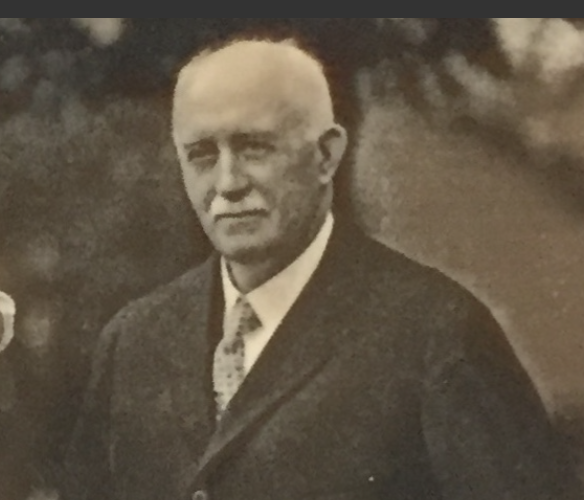
Hon. Gen. Robert Edward King  LORTON

Hon. Gen. Robert Edward King LORTON

Born
1773-08-12 12:00:00
Gender
Male

The Hon. Gen. Robert Edward King (1773-1864) aka Lord Lorton was the second son of Robert, the 2nd Earl of Kingston (of King House, Boyle) and Caroline Fitzgerald (cousins). Their large estate, centred around Boyle in County Roscommon, stretched to lands in Leitrim, Mayo and Sligo. The Earls of Kingston also held extensive lands in other parts of the country notably around Mitchelstown, Co. Cork and in Co. Tipperary.

General Robert Edward King and his father, at different times, were tried for the murder of Colonel Henry Fitzgerald (the half-brother of the Earl's wife, who had impregnated their daughter, Mary). Both were acquitted as no witnesses came forward.

In 1799, he inherited the heavily indebted (but subsequently much improved) Roscommon estate and married his first cousin Lady Frances Parsons (1775-1841) from whom the Harman name was later adopted.  He went on to become a distinguished Member of Parliament for Boyle until the Act of Union in 1801. Boyle was disenfranchised, and he received a tidy sum in compensation and was created Baron Erris (which he opposed). He was then created Viscount Lorton on 30th May 1806 and commissioned the building of Rockingham House (his new residence) in 1809-10. 

An anti-Catholic ministerialist, he was Ireland's leading Orangeman at the time, and actively engaged in unpopular efforts to convert the Catholics on his estate through schools and 'moral agents'. He brought up his children in a rigidly Evangelical household and, as soon as he came of age, put his first-born up against the pro-Catholic county Members in the General Election of 1826. (Lorton unsuccessfully brought forward another family member).

However, Lorton was by all accounts a fair landlord, much praised for his generosity to his tenants especially during the Great Famine. He invested a great deal of money in the development of his estate, reduced rents, created jobs and took care of any workers who fell ill.

DEATH OF VISCOUNT LORTON                                                [Dublin Evening Mail - 22 November 1854 ].

It is with extreme regret that we have to announce the death of Viscount Lorton, which sad event took place at his Lordship's residence, Rockingham, County Roscommon, on Monday night last. Viscount Lorton. (Robert Edward King), and Baron Erris of Boyle, county of Roscommon, in the peerage of Ireland ; and one of the representative lords; born 12th August, 1773; married 9th December, 1799 his cousin, Lady Frances Parsons, only daughter and heir of Laurence, 1st Earl of Rosse, and has had issue, Robert, born 17th July, 1804; married 7th December, 1829, Anne, sister of Sir Robert Gore-Booth, Bart, and has a son, Robert, born 18th October, 1831. [Laurence Harman, who assumed the additional surname of Harman in 1838; bora 1816; married 17th May, 1837, Mary, 7th daughter of the late James Rayraend Johnstone, Esq , of Alva, county Clackmannan, and ha* issue. Jane, married to Anthony Lefroy, Esq. of Newcastle, county of Longford. Eleanor died young. Caroline, married in 1827, to Sir Robert Gore-Booth Bart.; and died in 1828. Frances, married 6th April, 1834, to Charles Leslie, Esq., son of the Bishop of Elphin; and died 28th July, 1835.

This nobleman, who was the second son of Robert, 2nd Earl of Kingston, having distinguished himself a military officer, and attained the rank of Lieutenant-General in the army, was created Baron Erris in 1800, and Viscount Lorton, 30th May 1806. His Lordship is Lord Lieutenant and custoa-rotulorum the county Roscommon, and colonel of its militia. Asa resident nobleman, kind and considerate landlord—a pious Christian—in fact, in all the relations of life, his Lordship, through a long and time-honoured career, conspicuous in the peerage of his country; and at its close, full of years, the tomb closes over him amid the deep-felt sorrow and affliction of his family and relatives, and the regret and esteem of his numerous tenantry and friends. On a late occasion we had the happiness to record, in the columns of this journal, expression of the feelings of the noble Viscount's neighbours and tenantry of the county of Roscommon, rating from a numerous and highly respectable meeting, held at Boyle, on the occasion of the marriage of his Lordship's grandson, Mr. King, to the Honourable Miss Chichester; and think cannot better depict the kindly and affectionate state of feeling that existed between his Lordship and his fellow-countrymen than by placing before our readers the observations made by the gentleman who presented the address, and who was well qualified to form a judgment of the feeling subsisting between his Lordship and his tenants and neighbours in Roscommon:

Mr. Flanagan, before reading the address, observed what gratification it gave him to present to his lordship an address adopted at such an important meeting as that which lately assembled in Boyle; and what gave particular interest to it was, that no such unanimity ever prevailed in any meeting convened for a similar purpose; and never was more enthusiasm manifested than on that occasion. He also referred to the happy event which had taken place in his lordship's family in the marriage of his .grandson, and assure- 4 a lordship that he fully agreed in every sentiment contained in the address, and might safely say the same for all those gentlemen who accompanied him a deputation, well as for all who«e names were attached to it; and he earnestly hoped that while they were proud to call him their landlord, would have equal reason be proud of his tenantry."          


He was succeeded by his son, the Hon. Robert King (1804-1869) the 2nd Viscount Lorton & Anne Gore-Booth ... "a disaster from which the family never really recovered".


[Research by Rua Mac Diarmada 2018]


~ Ancestors from Rockingham or the Kingston estate? Post your connection below ~

Associated communities

Ardcarn (Roscommon)

Our aim is to connect all people with a link to Ardcarn (Roscommon). You may live here, have visited here or maybe are tracing ancestors who left long ago. In any case, we’re sure to have lots to share and are delighted to welcome you.

Other ancestors in this community

Buildings in this community

  • Rockingham House Roscommon

    Location: Ardcarn (Roscommon)

  • Glynn Homestead, Ardcarn 1800s

    Location: Ardcarn (Roscommon)

    Drumshinnagh

  • Ardcarne Church, County Roscommon

    Location: Ardcarn (Roscommon)

    Ardcarne, County Roscommon

  • Dereenahinch TOWNLAND

    Location: Ardcarn (Roscommon)

    Derreenahinch, Kilmactranny, Co. Roscommon

Timeline events in this community

  • 2000s

    Parish of Ardcarne

    2000-01-01 12:00:00

  • 1840s

    Famine Destitution in Ardcarne

    <p>An excerpt from a letter TO THE EDITOR OF THE MORNING POST during Black 47.</p> <p>DESTITUTION IN IRELAND.<br /> Sir— Fearing that the English public is not even yet actually awakened to the evil afflicting Ireland, so as to comprehend the urgent necessity for continued relief its to meet the gaunt destitution which pervades so vast a portion, of the Irish population; and believing that while the Government arrangements are slowly progressing a large number will for want of food and an opportunity to gain food by labour be sent into premature graves, I request to be allowed to submit through your journal some documents to the public, in the hope they may be effectual in exciting, further benevolent exertions to alleviate the alarming misery.<br /> I remain, Sir, Your obedient servant,<br /> George H. Stoddart,<br /> Hon. Sec, United Relief Association.</p>

    1847-04-19 12:00:00

  • 1930s

    Travelling Folk in the 1930s

    <p>Between 1937 and 1939, primary school pupils across the Republic of Ireland interviewed the elderly in their neighborhood to collect and record local stories and folklore from the 19th century. "The Schools Collection" as it became known is held by the Dúchas Folklore Collection in UCD and is and has been digitized online at duchas.ie. One of the topics schoolchildren were asked to write about were "Travelling Folk" or An Lucht Siúil. </p> <p>Here is a selection of what "settled" children wrote about travelers in the late 1930s.</p>

    1938-01-01 12:00:00

  • 1830s

    Ardcarne aka Crosna COOTEHALL in the 1830s

    <p>A snapshot of pre-famine local history, as described in the "Topographical Dictionary of Ireland" by Samuel Lewis, 1837. (The information collected here was submitted by members of the local gentry and clergy of the time).</p>

    1837-01-01 12:00:00

Boyle (Roscommon)

Our aim is to connect all people with a link to Boyle (Irish: Mainistir na Búille) town and the civil parish for Boyle Abbey, Carrigeenroe, Lough Key, Assylin and more.  You may live here, have visited here or maybe are tracing ancestors who left long ago. In any case, we’re sure to have lots to share and are delighted to welcome you.  

Other ancestors in this community

Buildings in this community

  • The Drumanone Dolmen

    Location: Boyle (Roscommon)

    L10289---a lane off the R294, around 3km from Boyle

  • Abbey Crest (formerly Glebe House)

    Location: Boyle (Roscommon)

    Abbey Crest, Military Road, Boyle, County Roscommon, Ireland

  • Boyle TOWN 1845

    Location: Boyle (Roscommon)

    Tangier House, Boyle, Co. Roscommon, Ireland

  • Fairyhill BOYLE

    Location: Boyle (Roscommon)

    Knocknashee, Boyle, Co Roscommon

Timeline events in this community

  • 1840s

    The Parliamentary Gazetteer of Ireland 1846

    1846-01-01 12:00:00

  • 1840s

    Irish Emigration to South Australia

    <p>IRISH EMIGRATION TO SOUTH AUSTRALIA We have watched, with the deepest interest, the free Emigration now in progress, under the auspices the Government, from this country to South Australia. Almost daily, for some weeks, have seen accounts of the transmission of numbers of orphans, of both sexes, from the various Workhouses to Plymouth, from whence they embark for their destination. Tho manner in which the Emigration of those poor children has been conducted*the admirable arrangements for their moral guardianship, as well upon the voyage as subsequently to their arrival in the Colony, are creditable in the highest degree the Colonial Secretary, Earl Grey, to the Colonial Land and Emigration Commissioners, the Irish Government, and, we roust add, to the Guardians of the Unions, who have given their cooperation. All those arrangements are fully described the following highly interesting official documents, which we have copied from the South Australian Government Gazette, dated the 24th August last:</p>

    1849-03-31 12:00:00

  • 1830s

    Rockite Attacks near Croghan

    <p>From the Roscommon &amp; Leitrim Gazette - Saturday 02 April 1831</p>

    1831-04-02 12:00:00

  • 1830s

    Cholera rages in Longford

    <p>FROM THE WESTMEATH JOURNAL</p>

    1832-07-23 12:00:00

Kilbryan (Roscommon)

Our aim is to connect all people with a link to Kilbryan (Roscommon). You may live here, have visited here or maybe are tracing ancestors who left long ago. In any case, we’re sure to have lots to share and are delighted to welcome you.

Other ancestors in this community

  • George Johnston

    Location: Kilbryan (Roscommon)

    Born: 1855-01-01 12:00:00

  • Robert King

    Location: Kilbryan (Roscommon)

    Born: 1804-07-17 12:00:00

Buildings in this community

  • Oatlands House LOUGH KEY

    Location: Kilbryan (Roscommon)

    Ballykeevican, Boyle, Co. Roscommon

Timeline events in this community

  • 1830s

    Boyle Poor Law Union formally declared

    <p>The Irish Poor Law Act of 1838 divided Ireland into poor law unions (in which paupers would receive poor relief). A union was named after the town on which it was centred (where its workhouse was located) and the "union" boundaries were unrelated to those of the civil parishes ( and crossed county boundaries in many cases). Prior to this date, poor relief was administered by parish and these records were kept in the Church of Ireland Vestry Books (held locally).</p>

    1839-08-20 12:00:00

  • 1940s

    The Big Snow of 1947

    <p>In February 1947 Ireland was hit with one of the biggest snowfalls ever seen in living memory. In many parts of the country, the towering snow drifts took more than 40 days to clear.</p>

    1947-02-24 12:00:00

  • 1610s

    James I incorporates the Borough of Boyle

    <p>On 25 March 1613, the Borough of Boyle was incorporated by the James I, King of England. The corporation was styled "The Borough-Master, Free Burgesses, and Commonalty of the Borough of Boyle". </p> <p>Until it was disenfranchised by the Act of Union, the Borough of Boyle returned two members of parliament. Lord Lorton, Earl of Kingston, to whom the Borough belonged, received £15,000 compensation for this loss of privilege.</p>

    1613-03-25 12:00:00

  • 1250s

    McGreevy chiefs of Moylurg lose their kingdom to the McDermotts

    <p>The kingdom of Maigh Loirg aka Moylurg in north Co. Roscommon is often referred to as "McDermott Country". However, it was the ancient territory of the McGreevy chiefs who were "Lords of Moylurg ... until the 13th century when they were subdued by, and become tributary to the McDermotts" [MacLysaght: "More Irish Families"]. </p> <p>The McGreevy Stone in Ardcarne Cemetery (erected circa 1930) states that na Mag Riabhaigh were "kings of Moylurg . . . until 1255".</p>

    1255-01-01 12:00:00

Kilronan (Roscommon)

Our aim is to connect all people with a link to Kilronan (Roscommon). You may live here, have visited here or maybe are tracing ancestors who left long ago. In any case, we’re sure to have lots to share and are delighted to welcome you.

Other ancestors in this community

Buildings in this community

  • Mount Allen National School

    Location: Kilronan (Roscommon)

    MOUNTALLEN, DRUMSHANBO, CARRICK-ON-SHANNON, CO. LEITRIM N41 T380

  • Keadew Cemetery

    Location: Kilronan (Roscommon)

    Keadew Cemetery, Churchacres, Co. Roscommon

  • Kilronan Castle, Co Roscommon, Ireland

    Location: Kilronan (Roscommon)

    Ballyfarnon, Boyle, Co. Roscommon

Timeline events in this community

  • 2000s

    Parish of Ardcarne

    2000-01-01 12:00:00

  • 1930s

    Travelling Folk in the 1930s

    <p>Between 1937 and 1939, primary school pupils across the Republic of Ireland interviewed the elderly in their neighborhood to collect and record local stories and folklore from the 19th century. "The Schools Collection" as it became known is held by the Dúchas Folklore Collection in UCD and is and has been digitized online at duchas.ie. One of the topics schoolchildren were asked to write about were "Travelling Folk" or An Lucht Siúil. </p> <p>Here is a selection of what "settled" children wrote about travelers in the late 1930s.</p>

    1938-01-01 12:00:00

  • 1830s

    Ballyfarnon in the 1830s

    <p>A snapshot of pre-famine local history, as described in the "Topographical Dictionary of Ireland" by Samuel Lewis, 1837.</p>

    1837-01-01 12:00:00

  • 1830s

    Keadue in the 1830s

    <p>A snapshot of pre-famine local history, as described in the "Topographical Dictionary of Ireland" by Samuel Lewis, 1837.</p>

    1837-01-01 12:00:00

Aghanagh (Sligo)

Our aim is to connect all people with a link to Aghanagh (Sligo). You may live here, have visited here or maybe are tracing ancestors who left long ago. In any case, we’re sure to have lots to share and are delighted to welcome you.

Other ancestors in this community

Buildings in this community

  • Hollybrook House

    Location: Aghanagh (Sligo)

    Hollybrook Demesne, Ballyhealy, Ballinafad, Co. Sligo

Timeline events in this community

  • 2000s

    Parish of Ardcarne

    2000-01-01 12:00:00

  • 1970s

    Foundation of Eastern Harps GAA Club

    1973-01-01 12:00:00

  • 1830s

    Boyle Poor Law Union formally declared

    <p>The Irish Poor Law Act of 1838 divided Ireland into poor law unions (in which paupers would receive poor relief). A union was named after the town on which it was centred (where its workhouse was located) and the "union" boundaries were unrelated to those of the civil parishes ( and crossed county boundaries in many cases). Prior to this date, poor relief was administered by parish and these records were kept in the Church of Ireland Vestry Books (held locally).</p>

    1839-08-20 12:00:00

  • 1830s

    Cholera in Sligo

    <p>Mayo Constitution - Monday 20 August 1832</p>

    1832-08-20 12:00:00

Killaraght (Sligo)

Our aim is to connect all people with a link to Killaraght (Sligo). You may live here, have visited here or maybe are tracing ancestors who left long ago. In any case, we’re sure to have lots to share and are delighted to welcome you.

Other ancestors in this community

Buildings in this community

No buildings are associated with this community.

Timeline events in this community

  • 1830s

    Boyle Poor Law Union formally declared

    <p>The Irish Poor Law Act of 1838 divided Ireland into poor law unions (in which paupers would receive poor relief). A union was named after the town on which it was centred (where its workhouse was located) and the "union" boundaries were unrelated to those of the civil parishes ( and crossed county boundaries in many cases). Prior to this date, poor relief was administered by parish and these records were kept in the Church of Ireland Vestry Books (held locally).</p>

    1839-08-20 12:00:00

  • 1840s

    Cattle driven in lieu of rent at Frenchpark

    <p>During the winter months of the Great Irish Famine, Lord De Freyne sanctioned "driving for rent" for the many tenants on his estate who had fallen into arrears. This harsh practice involved a bailiff driving a debtor's livestock off the land and selling it in lieu of rent. He had, the year previous, ordered his tenants not to dispose of their oats until they could see the exact extent of their losses and that he would not call upon them for rent until the calamity had been averted. This change of tack may somewhat explain why Frenchpark tenants burned an effigy of Lord de Freyne, outside his gate during the famine.</p>

    1846-12-16 12:00:00

  • 1830s

    Cholera hysteria from Croghan to Boyle

    <p>In February 1832, a devastating outbreak of Asiatic Cholera (which had left millions dead across the trade route to England) finally reached Ireland. This was a disease that had fatal consequences in a matter of a few hours. There were reports of people driven mad with fear of the disease. Thus began the mass hysteria that lead to the "Day of the Straws"...</p>

    1832-06-16 12:00:00

Hon. Gen. Robert Edward King LORTON