Back to ancestor search
Oliver Plunkett

Oliver Plunkett

Born
1625-11-01 12:00:00
Died
1681-07-01 12:00:00
Gender
Male


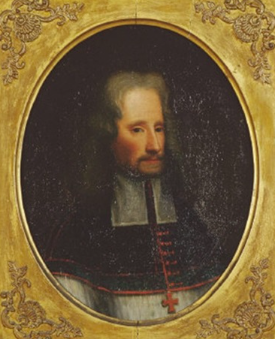
Oliver Plunkett was born in Loughcrew, Co. Meath on the 1st of November, 1625. Born into a wealthy family with powerful connections, Plunkett was able to follow his dream of becoming a priest by traveling to Rome in 1647. After receiving an education at the Irish College in Rome, Plunkett was ordained as a priest in 1654. Whilst in Rome he acted as a representative for the Irish Catholic bishops. 

Oliver Plunkett

Irish College in Rome

Meanwhile, back home in Ireland, tensions were rising between Catholics and Protestants as Cromwell's conquest of 1649-1653 made it illegal to publicly practise Catholicism. Many members of the Catholic clergy were executed as a result of this ruling. This made it impossible for Plunkett to return home without risking his life. As a result, he stayed in Rome where he studied to become a professor of theology. Whilst in Rome, Plunkett campaigned for the relief of the Irish Catholics. In recognition of his efforts, he was appointed Archbishop of Armagh in 1669. This position meant that he was now the Primate of all Ireland, the Pope's representative in Ireland. 

Plunkett returned to Ireland not long after the Penal laws were relaxed in 1660. He set up a Jesuit College in Drogheda, Co. Louth. This school saw an integration of both Catholic and Protestant students, the first of its kind in Ireland. 

St Oliver Plunkett and The Popish Plot

In 1678, Plunkett became entangled in The Popish Plot, an anti-Catholic conspiracy in which a number of men were falsely accused of plotting to have King Charles II assassinated. Though Plunkett was in hiding, he was captured in Dublin and brought to England for a trial. The legal proceedings were a mockery and Plunkett was sentenced to death for treason and 'promoting the Roman faith'. This ruling was denounced far and wide, and even Titus Oates, the man who created the fictitious plot, begged the King to save Plunkett's life. However, it had already gone too far and the King said that he could not now renege on the decision of the jury. 

The Popish Plot

King Charles II

Titus Oates

Oliver Plunkett was executed on July 1st 1681. Almost 300 years later he was beatified and canonized, becoming the first new Irish saint in about 700 years. He is remembered today in Ireland as a martyr to the cause of Irish Catholics and is commemorated by several streets, churches, and schools throughout the country which bear his name. He is the Irish patron saint of peace and reconciliation.

ALSO READ

Associated communities

Louth

Co. Louth, or Lú in Irish, is located in the north-east of Ireland.  It is known as “The Wee County” because it is the smallest county in Ireland.  We are home to Brù Na Bóinne (Palace of the Boyne) which is an internationally important complex of Neolithic chamber tombs.  We have a population of approximately 122,897.  We look forward to helping you connect with your ancestors’ place of origin.

Other ancestors in this community

Buildings in this community

  • King John's Castle, Carlingford, Louth

    Location: Louth

    Carlingford

  • Our Lady of the Nativity

    Location: Louth

    Church of Our Lady of the Nativity, Fieldstown, County Louth

Timeline events in this community

  • 1880s

    1887 All Ireland Senior Gaelic Football Final

    1888-04-29 12:00:00

  • 1900s

    1909 All Ireland Senior Gaelic Football Final

    1909-12-05 12:00:00

  • 1910s

    1910 All Ireland Senior Gaelic Football Final

    1910-11-13 12:00:00

  • 1910s

    1912 All Ireland Senior Gaelic Football Final

    1912-11-03 12:00:00

Meath

County Meath, or An Mhí in Irish, is in the mid-east region of Ireland.  We are a county rich in heritage and home to The Hill of Tara.  Our county town is Navan and we have a population of approximately 184,000.  We look forward to helping you connect with your ancestors’ place of origin.

Other ancestors in this community

Buildings in this community

  • Ruins of Church of the Blessed Virgin Mary at Knockcommon Graveyard

    Location: Meath

    MF8V+RM Ballinlough, Windmill Road, County Meath, Ireland

  • Knockcommon National School

    Location: Meath

    Knockcommon, Navan, Co. Meath, Ireland

  • Church Of The Nativity Of Our Lady, Rossnaree, Donore Catholic Parish

    Location: Meath

    Fieldstown, Beauparc, Co. Meath, C15 F726, Ireland

  • Slane Castle

    Location: Meath

    Slane, county Meath

Timeline events in this community

  • 1830s

    A Teltown Marriage

    <p>Irish historian John O'Donovan (1806-1861) who surveyed this district in the 1830s wrote of the 'Teltown Marriages':</p> <p>"A number of young men went into the hollow to the north side of the wall, and an equal number of marriageable young women to the south side of the wall which was so high as to prevent them from seeing the men; one of the women put her hand thro' the hole in the gate and a man took hold of it from the other side, being guided in his choice only by the appearance of the hand. The two were thus joined hands by blind chance were obliged to live together for a year and a day, at the expiration of which time they appeared at the Rath of Telton and if they were not satisfied with each other they obtained a deed of separation and were entitled to go to Laganeeny again to try their good fortune for the ensuing year."</p> <p>According to O’Donovan, this ceremony was performed at a place close to the Knockauns known as Lag an Aonaich or “Leganeeny” (the Hollow of the Fair).</p>

    1838-01-01 12:00:00

  • 1650s

    Civil Survey of Telletwon

    1654-01-01 12:00:00

  • 1830s

    Teltown aka Kilalton in the 1830s

    <p>From "A Topographical Dictionary of Ireland" by Samuel Lewis</p>

    1837-01-01 12:00:00

  • 1830s

    Night of the Big Wind

    <p><a href="https://www.irishcentral.com/roots/history/night-of-the-big-wind-ireland-1839">https://www.irishcentral.com/roots/history/night-of-the-big-wind-irelan…</a></p>

    1839-01-06 12:00:00

Loughcrew (Meath)

Our aim is to connect all people with a link to Loughcrew (Meath). You may live here, have visited here or maybe are tracing ancestors who left long ago. In any case, we’re sure to have lots to share and are delighted to welcome you.

Other ancestors in this community

Buildings in this community

No buildings are associated with this community.

Timeline events in this community

  • 1970s

    Sir Oliver Plunkett Canonized

    <p>Irish Saint, Oliver Plunkett, was canonized on the 12th of October 1975.</p>

    1975-10-12 12:00:00

  • 1680s

    The Execution of Oliver Plunkett

    <p>In June 1681, Oliver Plunkett was tried and found guilty of treason and 'promoting the Roman faith'. For this, he was hanged, drawn, and quartered on July 1st 1681. Nearly 300 years later, Plunkett was beatified and canonised becoming the first of the Irish martyrs to become a saint, and the first new Irish saint in about 700 years.</p>

    1681-06-01 12:00:00

St Peters (Louth)

Our aim is to connect all people with a link to St Peters (Louth). You may live here, have visited here or maybe are tracing ancestors who left long ago. In any case, we’re sure to have lots to share and are delighted to welcome you.

Other ancestors in this community

  • James Quigley

    Location: St Peters (Louth)

    Born: 1793-11-26 12:00:00

  • Robert F Ballard

    Location: St Peters (Louth)

    Born: 1928-01-01 12:00:00

  • John Graham

    Location: St Peters (Louth)

    Born: 1824-01-01 12:00:00

  • Mary Doggett

    Location: St Peters (Louth)

    Born: 1844-01-01 12:00:00

Buildings in this community

  • St Mary's National School

    Location: St Peters (Louth)

    Saint Mary's National School, Mount Saint Oliver, LAGAVOOREN, Drogheda, County Louth

  • St Mary's Sunday School

    Location: St Peters (Louth)

    Saint Mary's Sunday School, Mary Street, LAGAVOOREN, Drogheda, County Louth

  • Dominican Church Drogheda

    Location: St Peters (Louth)

    Dominic Street / Wellington Quay Drogheda

  • Old Abbey Plaque

    Location: St Peters (Louth)

    Old Abbey Drogheda

Timeline events in this community

  • 1640s

    The Siege of Drogheda

    1649-09-11 12:00:00

  • 1680s

    The Execution of Oliver Plunkett

    <p>In June 1681, Oliver Plunkett was tried and found guilty of treason and 'promoting the Roman faith'. For this, he was hanged, drawn, and quartered on July 1st 1681. Nearly 300 years later, Plunkett was beatified and canonised becoming the first of the Irish martyrs to become a saint, and the first new Irish saint in about 700 years.</p>

    1681-06-01 12:00:00