Geroge Babington
- Born
- 26 Mar 1826
- Died
- 12 Jun 1901
- Gender
- Male
- Place of migration
- Migrated to /Born in Canada
George Babington was born on 26 March 1826 at the home of his parents John Babington (About 1786-1866) and Mary Levins (?-?) in Camghy, Magheracloone, Carrickmacross, Co. Monaghan.
George Babington married Elizabeth Orr (Abt 1839-1880) at Glasleck Presbyterian Church, Shercock, Bailiebrough, Co Cavan. George and Elizabeth had nine children at their homw in the Knocknacran West townland, Magheracloone, Carrickmacross, Co. Monaghan.
Elizabeth Orr Babington died on 29 Ocober 1880 after having a stillborn son named Oliver.
George Babington and his nine children left Ireland via Cobh of Cork in 1885, arriving in Philadelphia, Pennsylvania, USA on 29 April 1885. From Philadelphia George and his family went to live in Meaford, Grey County, Ontario, Canada where George Babington spent the rest of his life.
George Babington is buried in Lakeview Cemetery in Meaford, Ontario, Canada.
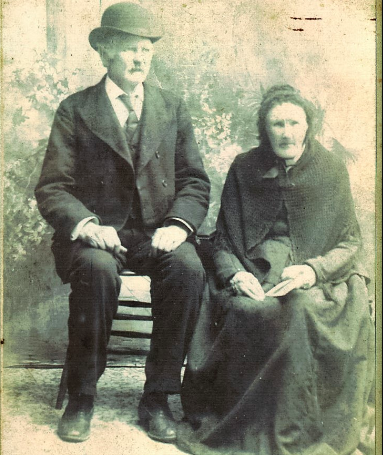
The photo of George Babington is with his older half sister Martha Matilda Babington Canning (1807-1904) in New York state, USA in about the late 1890's. Also atached is an obituary for George Babington that appeared in a Meaford newspaper. One of the tales in the family is that George Babington was supporter Charles S. Parnell and that George was a surveyor in Ireland. George Babington also had a reputation as having some issues with the drink.