Back to ancestor search
Elizabeth Orr

Elizabeth Orr

Born
1 Jan 1839
Died
29 Oct 1880
Gender
Female

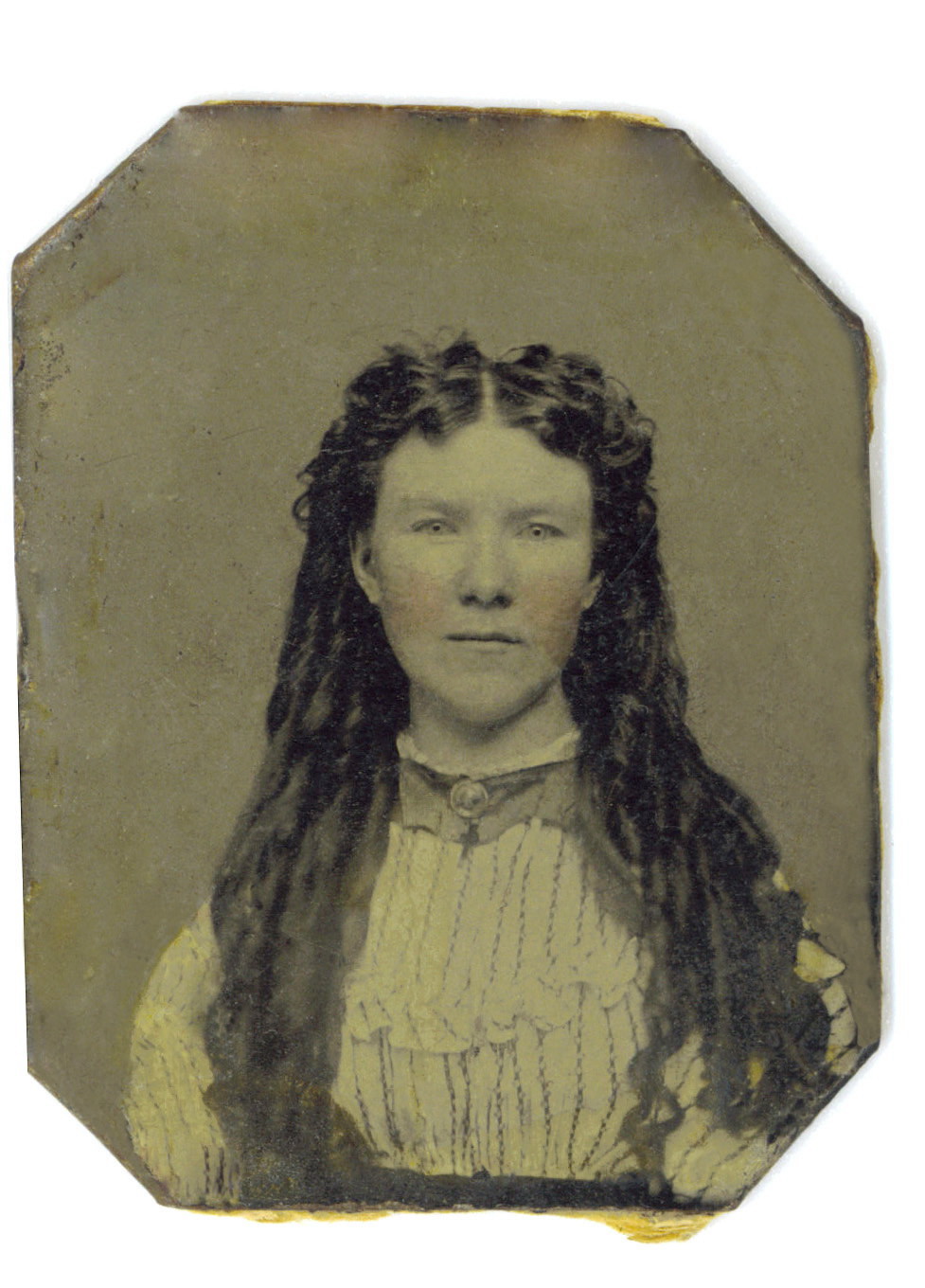
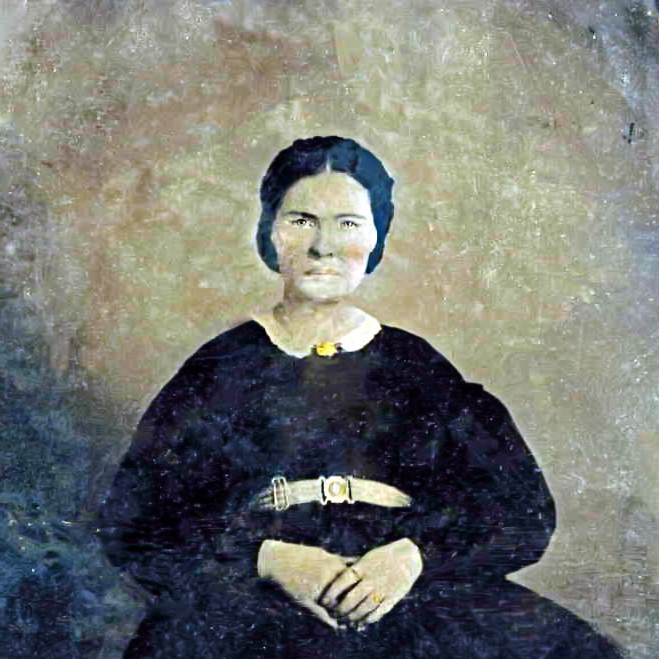
Elizabeth Orr was born about 1839 at the Orr family homstead at Gartnaneane, Bailieborough, Co. Cavan, the daughter of James Orr, Senior (1801-1887) and Jane Davidson (1809-1891).

She was married on 18 Feb 1864 at the Glasleck Presbyterian Church (Shercock, Co. Cavan) to George Babington (B: 26 March 1826, Camaghy, Magheracloone, Carrickmacross, Co. Monaghan; D: 12 June 1901, Meaford, Grey, Ontario, Canada).

She spent the rest of her life at the Babington homestead at Knocknacran West, Magheracloone, Carrickmacross Co. Monaghan where she had nine children.

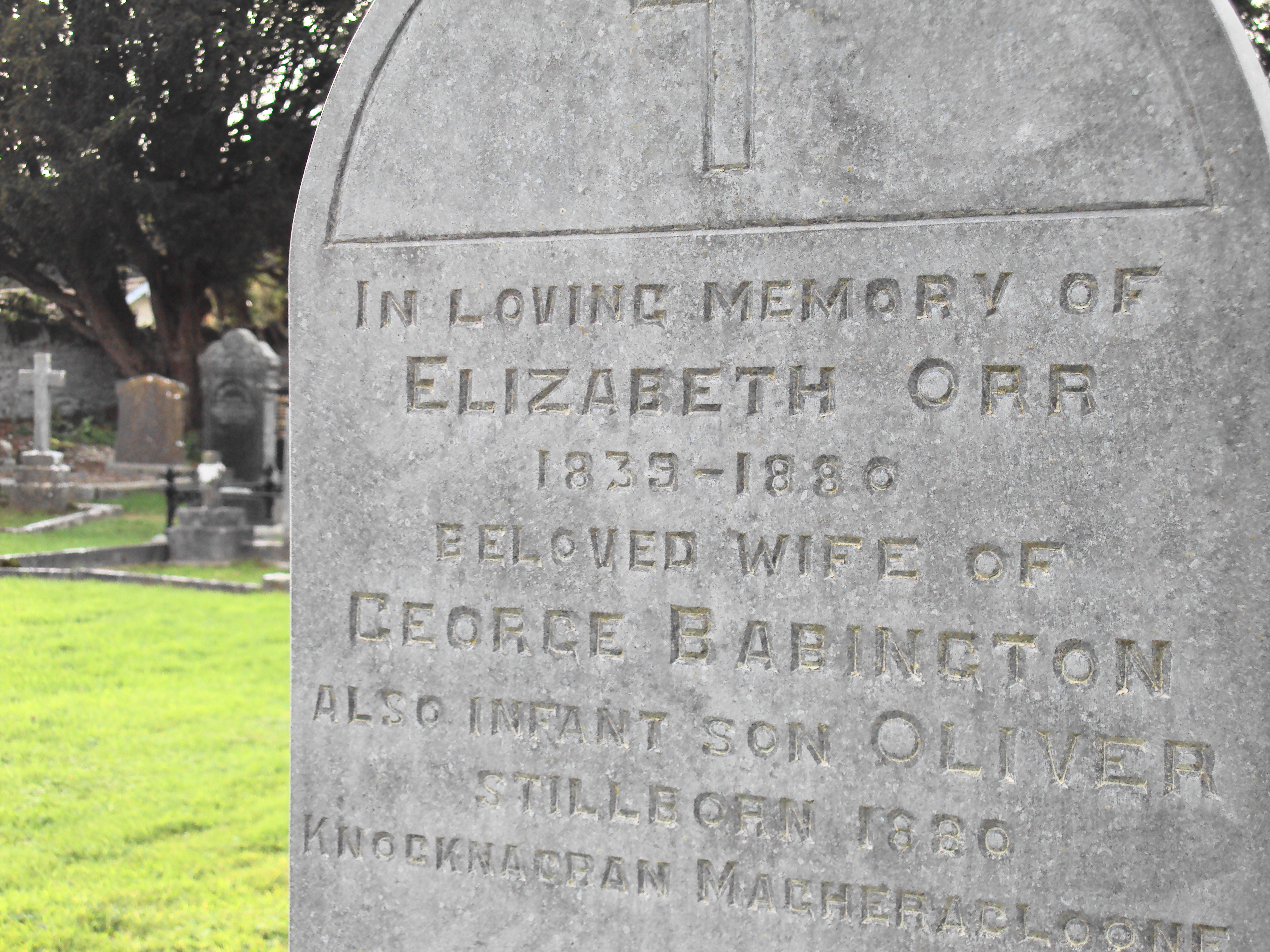
She was buried with a stillborn son Oliver in the churchyard of St. Molua's COI church in Magheracloone parish, Co. Monaghan.

Her husband George and her nine children left Ireland for Canada in 1885.

When in the 1960's her North American grandchildren discovered that her grave lacked a headstone they arranged through an Irish Babington seond cousin to have a headstone placed at her and Oliver's grave.

Associated communities

Bailieborough (Cavan)

Our aim is to connect all people with a link to Bailieborough (Cavan). You may live here, have visited here or maybe are tracing ancestors who left long ago. In any case, we’re sure to have lots to share and are delighted to welcome you.

Other ancestors in this community

Buildings in this community

  • Lourdesville Secondary School

    Location: Bailieborough (Cavan)

    Bailieborough, Co. Cavan

  • F. McDonald, William Street/Anne Street, Bailieborough, Co. Cavan.

    Location: Bailieborough (Cavan)

    WilliamSt./Anne Street, Bailieborough, Co. Cavan

  • Two shops, one sign.

    Location: Bailieborough (Cavan)

  • First Bailieborough (Corglass) Presbyterian Church

    Location: Bailieborough (Cavan)

    Bailieborough Cavan

Timeline events in this community

  • 1930s

    Travelling Folk in the 1930s

    <p>Between 1937 and 1939, primary school pupils across the Republic of Ireland interviewed the elderly in their neighborhood to collect and record local stories and folklore from the 19th century. "The Schools Collection" as it became known is held by the Dúchas Folklore Collection in UCD and is and has been digitized online at duchas.ie. One of the topics schoolchildren were asked to write about were "Travelling Folk" or An Lucht Siúil. </p> <p>Here is a selection of what "settled" children wrote about travelers in the late 1930s.</p>

    1 Jan 1938

  • 1860s

    The Porra Donnellys Abroad

    <p>This is Part 2 of the story of the Donnelly descendants of the three brothers that arrived and settled in Greaghnadarragh, Bailieborough, Cavan in the early 1800's that emigrated. It is the stories of five members of the Porras, my branch of the Donnellys.</p>

    1 Jan 1866

  • 1860s

    The Donnellys of Greaghnadarragh Abroad

    <p>Following on from the story of the three Donnelly brothers that arrived in Greaghnadarragh, Bailieborough, Cavan in the early 1800's and settled there raising through their descendants five branches of their families, the following is Part 1 of the life and times of some members of those families that emigrated to America.</p>

    1 Jan 1860

  • 1870s

    Dr. Richard Ryan, appointed Medical Officer to Bailieborough Workhouse.

    <p>This article was published in The Anglo Celt on 11 December 1926, it detailed the appointment of Dr. Richard Ryan.</p>

    12 Jul 1871

Magheracloone (Monaghan)

Our aim is to connect all people with a link to Magheracloone (Monaghan). You may live here, have visited here or maybe are tracing ancestors who left long ago. In any case, we’re sure to have lots to share and are delighted to welcome you.

Other ancestors in this community

Buildings in this community

  • St. Molua's COI Church, Magheracloone

    Location: Magheracloone (Monaghan)

Timeline events in this community

  • 1840s

    Black 47: State of Destitution around Carrickmacross

    <p>In the entire period of the Great Famine in Ireland (1845-1851) the most dramatic population decrease from death and emigration occurred in "Black '47". Board of Works correspondence warned of imminent death from starvation, plague and disease unless drastic measures were taken for the relief of distress in Ireland.</p>

    20 Feb 1847