
Culture / Heritage · Derry
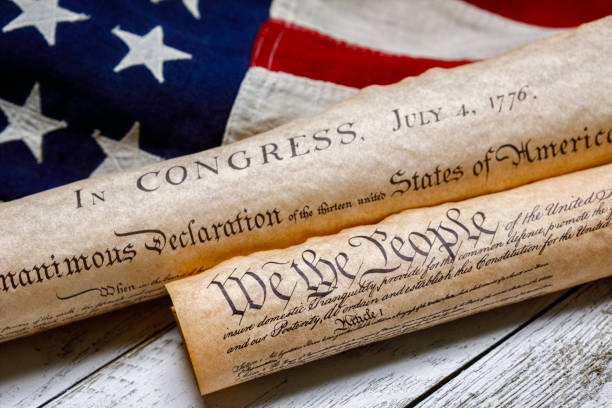
Fourth of July, 2026 will mark the 250th anniversary of the signing of the Declaration of Independence in the United States of America. America250, https://america250.org/, aims to ‘engage every American in the 250th anniversary of the United States.’
The Scots-Irish played a key role – politically and economically – in 18th century North America and in the events which resulted in the foundation of the United States of America.
The Scots-Irish played an important role in the Revolutionary War (1775-1783). For instance, John Dunlap of Strabane was printer of the Declaration of Independence of 4 July 1776 and Charles Thomson of Maghera, Secretary of the Continental Congress, was one of only 2 signatories to the original Declaration of Independence, the other signatory being John Hancock, President of the Continental Congress.
Who are the Scots-Irish?
The term Scots-Irish refers to people whose ancestors, often Presbyterian, originated in Scotland and settled, during the 17th century, in Ireland in the nine northern counties of the Province of Ulster: Antrim, Armagh, Down, Fermanagh, Derry and Tyrone in Northern Ireland, and Cavan, Donegal and Monaghan in the Republic of Ireland. They are also called Scotch-Irish or Ulster-Scots. Today, it is a matter of personal preference to refer to these people as Scotch-Irish, Scots-Irish or Ulster-Scots; in Northern Ireland they are generally referred to as Ulster-Scots and in the United States as either Scotch-Irish or Scots-Irish.
One commentator has described the Scotch-Irish as being “brewed in Scotland, bottled in Northern Ireland and uncorked in North America”.
By the end of the 17th century a self-sustaining settlement of English and Scottish colonists had established itself in Ulster. One estimate of British population of Ulster is 40,000 by 1640 (with 60% of Scottish origin), 120,000 by 1670 and 270,000 by 1712. It is also estimated that by 1715, when Scottish migration to Ulster had virtually stopped, the Presbyterian population of Ulster, i.e. of essentially Scottish origin, stood at 200,000.
Hence surnames such as Anderson, Arbuckle, Armstrong, Barr, Beattie, Bell, Buchanan, Burns, Campbell, Carruthers, Colhoun, Craig, Cunningham, Dunlop, Elliott, Ferguson, Finlay, Fleming, Frazer, Gillespie, Graham, Grant, Hamilton, Hanna, Haslett, Henderson, Holmes, Houston, Irvine, Irwin, Johnston, Kennedy, Kilgore, Lindsay, McAllister, McCartney, McClean, McClelland, McClintock, McCorkell, McCormick, McDonald, Miller, Mitchell, Montgomery, Moore, Olphert, Orr, Parkhill, Patterson, Patton, Rankin, Robb, Rosborough, Ross, Scott, Starrett, Stewart, Thompson, Wallace, Wilson and Young have been established in northern Ireland for well over three centuries.
18th Century Emigration and the Ulster-Scots
It is estimated that 100,000 Scots migrated to Ulster in the 17th century and that about two-thirds of 18th century emigrants from Ireland to North America were Ulster Presbyterians.
At a conservative estimate 120,000 Presbyterians left the north of Ireland, through the ports Belfast, Derry, Newry, Larne and Portrush, for the American colonies between 1718 and the beginning of the War of American Independence in 1776. A combination of bad harvests, exorbitant rents and the feelings of second-class citizenship in a country which they had defended on no less than three occasions in the 17th century drove many of them to a new life in North America.
The first step in what was to become a large-scale exodus of Scots-Irish occurred in 1718 when one thousand northern Irish people disembarked at Boston from ten vessels which had departed from Derry and Coleraine. The bulk of these early emigrants arriving in Boston in 1718 came from the Foyle (Counties Derry, Donegal and Tyrone) and Bann valleys (Counties Derry and Antrim). James MacGregor, minister of Aghadowey Presbyterian Church, County Derry accompanied some of his congregation to Boston and they established, in 1719, the settlement of Londonderry, New Hampshire.
The Frontier
The Scots-Irish tended to enter America through Philadelphia and then head for the frontier. Of 128 vessels advertised to sail from Derry between 1750 and 1775, 99 (77%) sailed for Philadelphia with 10 each destined for Charleston (in South Carolina) and Nova Scotia (Canada).
From Philadelphia the Scots-Irish then poured across the Susquehanna into the Cumberland Valley. From the 1740s they moved southwards through the Great Valley, east of the Appalachian Mountains, across the Potomac and into the Shenandoah Valley (also known as the Valley of Virginia) between the Blue Ridge and Appalachian ranges. From there they continued south into the Piedmont of North and South Carolina.
By the Revolutionary War, in 1776, about 90% of Ulster settlers had made their homes in Pennsylvania, the Valley of Virginia and the Carolinas; and they dominated a one-thousand-mile frontier along the spine of Appalachia from Pennsylvania to South Carolina. On the eve of the American Revolution over 30% of Pennsylvania’s 350,000 inhabitants were of North Irish origins.
The American War of Independence has been referred to as the Scots-Irish Presbyterian Rebellion. The Scots-Irish were the backbone of George Washington’s patriot army.
It was said of the early settlers in Pennsylvania that the Quakers were better traders, the Germans better farmers and the Scots-Irish were best at coping with frontier conditions.
With the War of American Independence over the Scots-Irish then spearheaded the first thrusts across the Appalachian range, through the Cumberland Gap, into Kentucky and Tennessee. By 1792, 100,000 people had moved into the frontier lands through the Cumberland Gap along the Wilderness Road.
Although Protestant migration as a proportion of Irish migration declined relative to Catholic migration after 1815, the numbers of Irish Protestants emigrating to North America in the first half of the 19th century was still greater than numbers that departed in the 18th century. For example, in the Famine decade, 1845-1855, at least 1.8 million migrants left Ireland for North America; of whom, at least 5% (90,000) were Presbyterian.
The Scots-Irish and the development of an Atlantic Economy
In the course of the 18th century emigrants from ‘Ulster exported an economy’ to North America centred on the production of linen cloth. With Parliament opening, in 1705, the American colonies to linen produced in Ireland, every facet of Ulster life became tied to the linen economy.
Flax was grown on very small farms, prepared and spun into linen yarn and woven into webs of cloth by families in their own homes, and sold in linen markets in towns to the linen drapers and bleachers who finished the linens and marketed them. In the 18th century the domestic linen industry expanded so rapidly across the province that annual exports of linen cloth increased 40-fold.
Within a few years linen transformed the Ulster landscape. By the 1720s flax growing and linen weaving replaced food crops as the staples of Ulster agriculture. Ulster was integrated into a market-oriented economy. Commercial networks quickly developed, linking the port towns with the linen market towns and with a wider Atlantic world.
In Ulster farmers grew flax for fibre which they could weave into cloth, so they purchased the best available seed each planting season. From 1731 American flaxseed could be imported directly into Ireland. By 1740 American flaxseed made up 80% of the seed shipped to Irish ports, and by 1750 flaxseed was Pennsylvania’s third most important export after flour and wheat.
The cultivation of flax for seed made rural communities in Pennsylvania, New York and New England integral to the Ulster economy. American flaxseed provided the essential first step in the linen-making process and the flaxseed export financed the sales of Irish linen that made the British North American colonies the largest market for linen cloth woven in Ulster. By 1730 linen accounted for a quarter of total value of exports from Ireland.
It was the linen industry that allowed Irish merchants to specialise in the passenger trade and commerce with the American colonies. By 1735 the first merchants from Ulster had begun establishing themselves in New York and Philadelphia and other colonial ports. They shipped Irish emigrants, sold Irish linen and bought flaxseed to send home.
Early on Philadelphia drew a community of Ulster-born merchants who specialised in the flaxseed trade and built up significant backcountry networks with their fellow countrymen. ‘For these men this was an Atlantic world.’ The networks they established reached across the Atlantic, linking Derry to Philadelphia and to the backcountry of Pennsylvania.
_________________________________
Source: Scotch-Irish Merchants in Colonial America: The Flaxseed Trade and Emigration from Ireland, 1718-1775, Richard K. MacMaster, Ulster Historical Foundation, Belfast, 2009
Learn more about Derry Geneology at https://www.derry.rootsireland.ie/