
Culture / Heritage · IrelandXO
Early Education in Ireland
It was not until 1537 that the state became in some way involved in education. In that year Henry V111 made the first input of the state in education. He decreed that a school was to be set up in every Parish under the management of the local clergyman. Again, this education was primarily aimed at the Protestant population and had little regard for the majority Roman Catholic population. The aim of the schools was to promote the English language and customs. Few schools were set up and a very small percentage of the population were catered for. In 1570 Elizbeth 1 set up what were to be free Diocesan Schools. One school was run in the chief town of each Diocese and the teacher was to be an Englishman. In 1695 William ordered Henrys decree on Parish schools be strictly put into practice. However, both Parish and Diocesan schools were largely ineffective and in 1809 there were 34 schools catering for only 380 pupils.
Charter schools
The next attempt at state intervention in Irish education was the setting up of Charter schools, which were schools run by charitable organisations. The first was set up in Cork in about 1710. Again, these were Protestant schools set up to teach the English language and Protestant religion. There was a system of inspection in operation and the schools were grant aided. Clothes and food were provided in addition to learning, in return for manual labour. To promote their Protestant aims many of the pupils were apprenticed to Protestant landlords when they finished. However, there are many reports of children leaving these landlords.
Education societies
In the early 1800s a number of voluntary education societies came to Ireland. Their main aim was again a crusade to educate the Irish in the English language and Protestant religion and to ‘rid Ireland of the scourge of Catholicism’, although some had more honourable intentions. Needless to say, they did not get much support from the clergy for their schools and few children attended. A noticeable exception to this was the Kildare Place Society (KPS) society was interested in the education of the poor and had rules banning the teaching of religion. These schools were acceptable to the Catholic church and in the early years the number of schools increased dramatically. Eventually the KPS fell out of favour with the church. There were two main reasons for this. The first is that the society began to support other schools which were blatantly anti Catholic. Secondly, they got entangled in an argument concerning the use of the bible. The bible was the book used in the schools to teach reading and in the schools of the KPS it was read without comment or interpretation. The Catholic bishops had a problem with this as Catholics were not meant to put their own interpretation on the bible. Therefore, the bishops could no longer support these schools.
Hedge schools
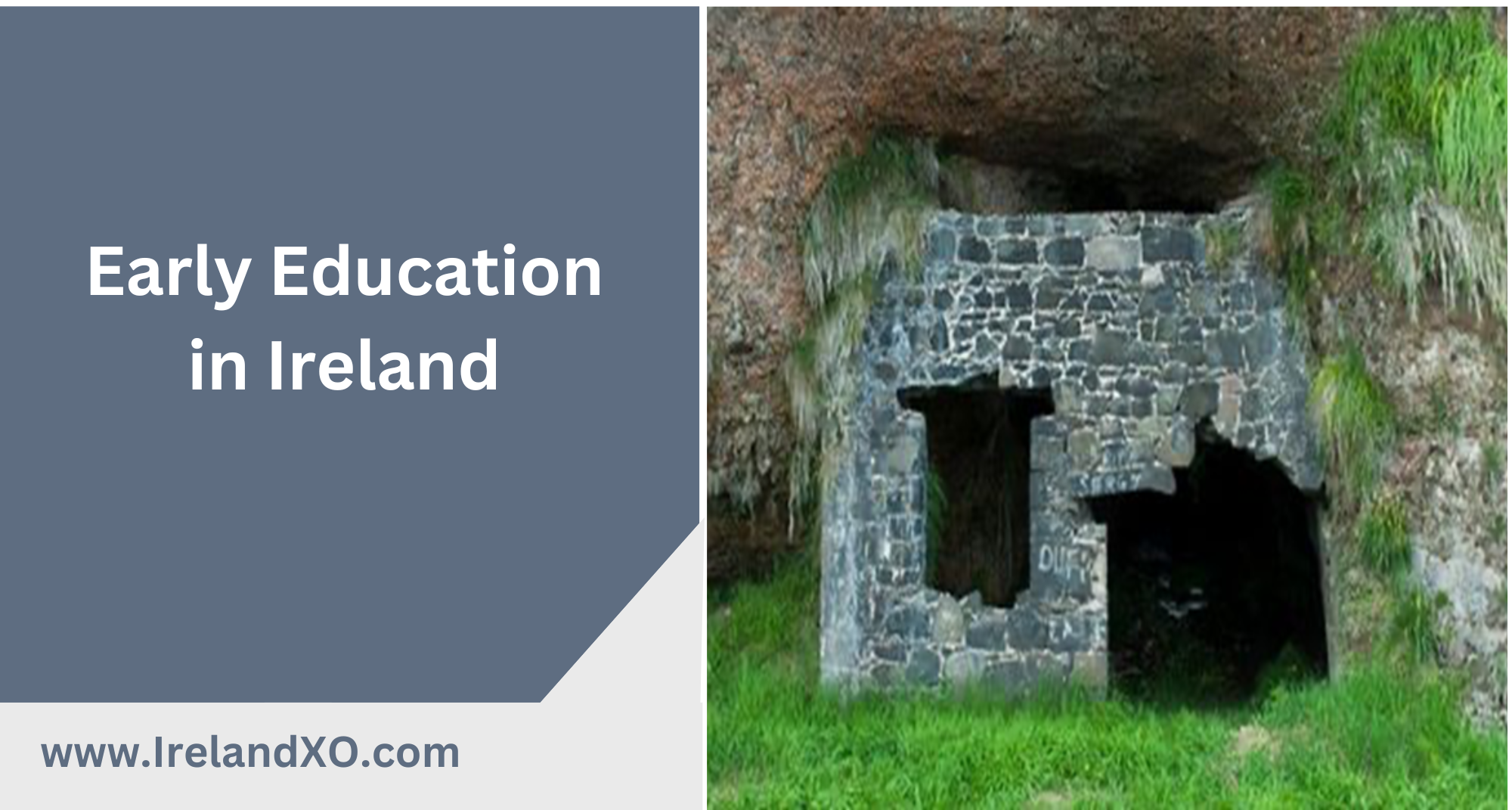
Throughout this period and indeed right up to the late 19th century, there was a system of education around the country called the Hedge School. This term was used because in the earlier years when the Penal Laws were being enforced, the schools were run by roaming teachers and the school was run in the fields and sheds around the country. They were highly illegal and teachers ran the risk of severe punishment if caught. There was a fixed fee payable to the teacher by the pupil and this depended on the teacher and what the parents could afford. In later years the enforcement of the Penal Laws was not as strict and the Hedge schools became a bit more regularised. Collections were held after Mass and this usually paid the teacher’s salary and a more regular building was provided. Hence, they became known in some places as 'Free' schools. There was no state involvement in these schools. They were run and supervised by the local Roman Catholic clergy, though the local Protestant landlord often supported the schools. There was no training for the teachers so standards varied tremendously. Some teachers were former seminarians, educated abroad, and therefore had Greek, and Latin. Others were former pupils of Hedge schools and had a very limited education. Despite this, these schools did a tremendous amount for the education of the public. The basics of reading, writing and arithmetic (the 3 r’s) were mainly taught, though some of the better educated teachers taught Greek, Latin and math also.
The Second Report of the Commissioners for Education in Ireland, published in 1826 but based on data from 1824, contains information on thousands of Hedge Schools, including teachers, condition of the school, fees charged, if any, and attendance.
National Education Board
At the request of the Catholic bishops a Commission was set up in 1824 to investigate the education system which was supported by public funds. Following this, in 1831 the National Education Board was set up by Lord Stanley (he claimed the idea to be his own, but it was actually based on proposals put forward in 1787). This was a landmark in state involvement in education. It was the first example in Europe of real state involvement in education and like many other British policies was an experiment in Ireland. It is also a reflection on the interest the Irish people had in education of the poorer classes. The Board was set up with the aim of literary and moral teaching only religious teaching was the function of the local clergy. The original proposals for setting up an education board were put forward in 1787, however these were forgotten in political crises like the Act of Union in 1801. These proposals were passed through many Commissions and reports before being finally accepted, in a modified form, in 1831.
The Board was multi denominational and consisted of 7 people (2 RC, 2 Presbyterian and 3 Anglican). The schools were to be non denominational, with religious teaching, by the local clergy, being allowed outside of school hours. Inspectors were appointed to monitor the running of the system. A grant system was set up to support the building of schools, the supply of books and the payment of teachers. Local funds were to be raised to help with these payments. Teachers were to be appointed by the local manager (and approved by the Board) and were to be trained in what were called ‘model schools’ in Dublin, especially set up for training teachers. These ‘model schools’ were not a great success in terms of teacher training in the country. In 1847, 16 years after the board had been set up, more than half of the teachers in the country were still untrained. The board set about correcting this and set up ‘model schools’ in each province. The teachers were to attend for a period of 6 months, after which they were to receive a certificate. Children from the local National school attended the model schools so that the trainee teachers had a class to practice on. Religious instruction in the ‘model schools’ was the responsibility of the relevant clergy. Though the idea seemed good, the reality was that the ‘model schools’ were not well attended. In addition, the Catholic church vigorously opposed the ‘model schools’.
For further information on Hedge Schools see: https://irelandxo.com/ireland-xo/news/irish-hedge-schools
For further information on the national school system and the available records at the National Archives see: https://irelandxo.com/ireland-xo/news/irish-national-education-sources-relating-19th-century
For further information on the publicly available national school roll books see the following at FamilySearch (https://www.familysearch.org/en/wiki/Ireland,_National_School_Registers_-_Inventory),
FindMyPast (https://www.findmypast.ie/articles/ireland-national-schools-list),
The National Archives of Ireland (https://nationalarchives.ie/wp-content/uploads/2025/01/RollRegDeptEducation.pdf)
and Ancestry (https://www.ancestry.co.uk/search/collections/62023/?srsltid=AfmBOoqEaOhUd3HQ7UJ_l1b1Ph1Whp2-bWXCxrKYZIAV8WzqvB9tTpe5).
Some records are also available at Roots Ireland and other websites.