
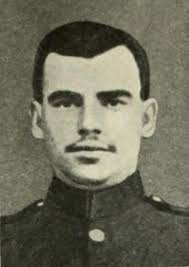
William Keneally
- Born
- 26 Dec 1886
- Died
- 29 Jun 1915
- Gender
- Male
- Place of migration
- Migrated to/Born in UK
William Keneally was born in Wexford town on the 26th of December 1886. When his father retured from military service, the Keneally family moved to England. There, Keneally got a job as a coal miner at the age of 13.
As a young man, Keneally enlisted in the British military forces. He was placed in the 1st Battalion of the Lancashire Fusiliers as a private and sent to fight in the First World War.
On the 25th of April 1915, when Keneally was 28 years old, the battalion were at Cape Helles in Gallipoli, Turkey when they came under heavy fire from machine guns. Keneally, along with others, ran into the onslaught of enemy fire to cut the wires. Thanks to Keneally's actions, the strategic point of the cliffs was won. He was awarded the prestigious Victoria Cross for his bravery.
Keneally was promoted to the rank of corporal, and later to lance-sergeant.
On the 28th of June 1915, Keneally was involved in the Battle of Gully where he was mortally wounded. He died the next day and was buried in the Lancashire Landing Cemetery, at the site of his great victory in Gallipoli.


