
Back to ancestor search
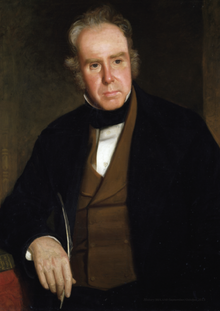
William Carleton

William Carleton

Born
14 Mar 1794
Died
30 Jan 1869
Gender
Male
Place of migration
Stayed in Ireland

William Carleton (1794–1869) was an Irish writer and novelist, best known for this collection of ethnic sketches of the stereotypical Irishman.

He the son of a native Irish-speaking Catholic tenant farmer, and his mother was a noted singer who sang in Irish. His family were evicted from their small-holding in 1813.

His accusations of violence and alcoholism among the Irish tenant class alienated the sympathies of many.

Aged about nineteen, he went on a religious pilgrimage to Lough Derg which made him give up the thought of entering the priesthood, and he later converted to Protestantism.

In 1853, he and his family lived at 3, Marino Terrace. Carleton died in Ranalagh Dublin, several hundred pounds in debt. 

His published works include:

  • Traits and Stories of the Irish Peasantry, (1830).
  • Tales of Ireland, (1834).
  • Fardorougha the Miser,(1839).
  • Valentine McClutchy, (1845).
  • The Black Prophet, a tale of the Irish Famine,(1847).
  • Willy Reilly and his Dear Colleen Bawn, (1855).
  • Redmond Count O'Hanlon, the Irish Rapparee, (1862)

READ FREE ONLINE Traits and Stories of the Irish Peasantry, by William Carleton

Associated communities

St Peters (Dublin)

Our aim is to connect all people with a link to St Peters (Dublin). You may live here, have visited here or maybe are tracing ancestors who left long ago. In any case, we’re sure to have lots to share and are delighted to welcome you.

Other ancestors in this community

Buildings in this community

  • Grove House SYNGE ST

    Location: St Peters (Dublin)

    Grove House, 37 Synge Street, Dublin 8

  • Iveagh House STEPHENS GREEN

    Location: St Peters (Dublin)

    Iveagh House, 80-81 St Stephen's Green, Dublin 2

  • St Kevin's RC Church & Parish

    Location: St Peters (Dublin)

    St Kevin's Church, Harrington Street, Dublin 8

  • St Kevins Churchyard

    Location: St Peters (Dublin)

    St Kevin's Park, Camden Row, Dublin 8, Ireland

Timeline events in this community

  • 1910s

    Easter Rising Compensation Claims

    <p>The Property Losses (Ireland) Committee, 1916 (PLIC) was established in June 1916 to assess claims for damages to buildings and property as a result of the destruction caused by the 1916 Rising. </p>

    1 Jan 1916

  • 1840s

    256 Irish Immigrants sail for Australia aboard the DIGBY

    <p>EMIGRATION Plymouth, Dec. 10th: ”There are now single Irish females, orphans, and few married couples, here, about to proceed to Australia in the Digby. They arrived in the depot on Monday last (Dec 4th) by one of the Irish steamers. [Roscommon Messenger - 27 Dec 1848]</p> <p>"The Digby has orders on that day (December 4th) to ship her passengers for the same destination (South Australia). They will consist exclusively of another batch of Irish girls, picked from the Irish unions." [The Ipswich Journal - 2 Dec 1848]</p>

    4 Dec 1848

  • 1990s

    The Commitments wins a BAFTA for Best Movie

    <p>The Commitments won four BAFTA Awards at the 1992 British Academy Film Awards.</p>

    17 Mar 1992

  • 1830s

    Dublin Banking in the 1830s

    <p>Excerpt from Lewis' Topographical Dictionary of Ireland for the metropolis of Dublin (pub. 1837). For more snapshots of pre-famine local history for Dublin city parishes, see below.</p>

    1 Jan 1837

Clogher (Tyrone)

Our aim is to connect all people with a link to Clogher (Tyrone). You may live here, have visited here or maybe are tracing ancestors who left long ago. In any case, we’re sure to have lots to share and are delighted to welcome you.

Other ancestors in this community

Buildings in this community

  • St. McCartans Cemetery

    Location: Clogher (Tyrone)

  • Clogher Workhouse

    Location: Clogher (Tyrone)

    Valley Nursing Home, Tullybroom Rd, Clogher, Tyrone

Timeline events in this community

  • 1830s

    Augher Town in the 1830s

    <p>A snapshot of pre-famine local history, as described by Samuel Lewis in the "Topographical Dictionary of Ireland" 1837.</p>

    1 Jan 1837