Back to ancestor search
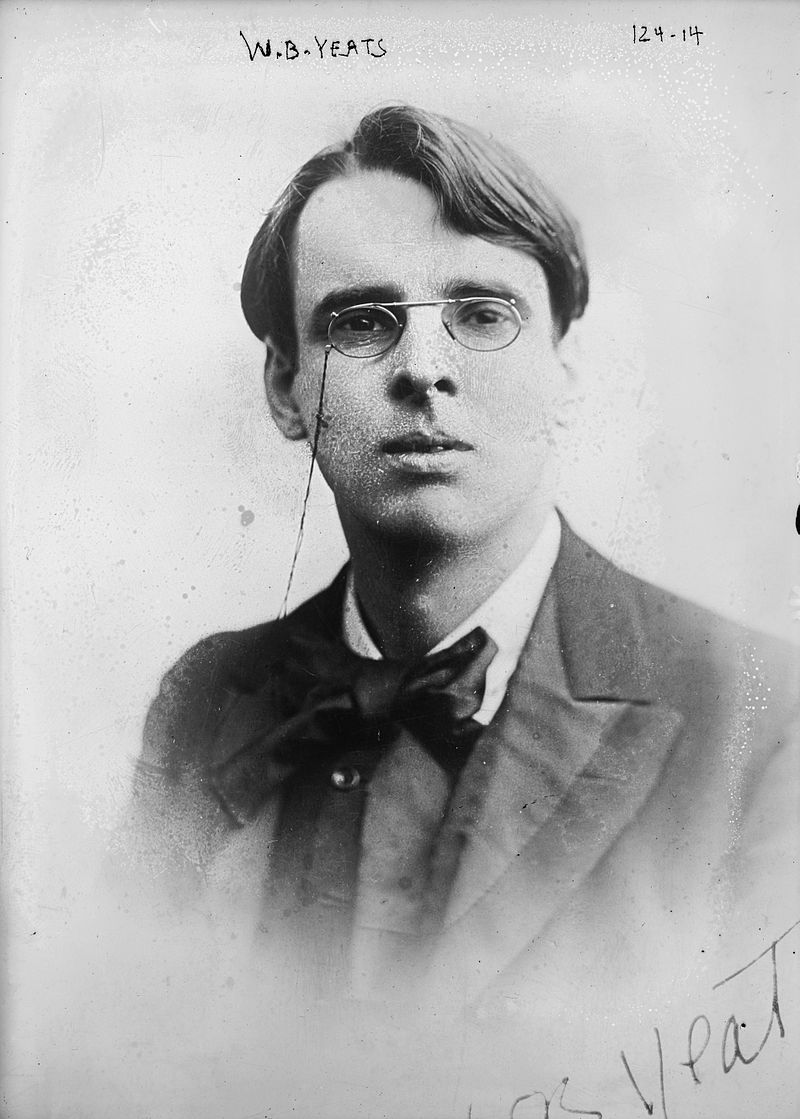
William Butler Yeats

William Butler Yeats

Born
1865-06-13 12:00:00
Died
1939-01-28 12:00:00
Gender
Male

William Butler Yeats (1865-1939) is one of Ireland's foremost figures of 20th-century literature.

William Butler Yeats

Bertha Georgia Hyde Lees beside W. B. Yeats

Born in Sandymount in south Co. Dublin, the family relocated to his mother's home at Merville, Sligo to stay with extended family. Here the young poet came to think of Co. Sligo as his childhood and spiritual home. Its landscape became, over time, both literally and symbolically, his "country of the heart".

His father, John Butler Yeats (1839–1922), was a lawyer and a well-known portrait painter. The Butler Yeats family were highly artistic; William's brother Jack B. Yeats became an esteemed painter, and his sisters Elizabeth Yeats and Susan Mary Yeats (aka Lollie and Lily Yeats) were part of the Arts and Crafts movement.

John Butler Yeats

Jack Butler Yeats

Elizabeth Corbet (Lolly) Yeats

Susan Mary (Lily) Yeats 

The Yeats family are descended from well-known painter Jervis Yeats (d 1712), who was a Williamite soldier and linen merchant. In 1773, William's great-great-grandfather, Benjamin Yeats (Jervis's grandson) and married Mary Butler whose family had a landed estate in County Kildare. From this marriage, the family kept the name Butler.

Mary was descended from the Butler of Neigham (pronounced Nyam) Gowran family, who were descended from an illegitimate brother of the 8th Earl of Ormond.

WB Yeats' mother, Susan Mary Pollexfen, came from a wealthy merchant family in Sligo, who owned a milling and shipping business. John Yeats stated that "by marriage with a Pollexfen, we have given a tongue to the sea cliffs".

Susan Mary Pollexfen

In 1867, the family moved to England so that John, could further his career as an artist. WB Yeats spent his summers in the west of Ireland at the family house in Sligo. 

READ MORE: Countess Markievicz

In 1880, for financial reasons, the family returned to Dublin, living at first just south of the Liffey at Harold's Cross and later at Howth in north Co. Dublin. During this period WB Yeats started writing poetry, and, in 1885, Yeats's first poems were published. 

With his London and Dublin education, Yeats was very much part of London's fin de siècle and yet was active in societies that attempted an Irish literary revival.  His plays usually treat Irish legends; they also reflect his fascination with mysticism and spiritualism. The Countess Cathleen (1892), The Land of Heart’s Desire (1894), Cathleen ni Houlihan (1902), The King’s Threshold (1904), and Deirdre (1907) are among the best known. Together with Lady Gregory he founded the Irish Theatre, which was to become the Abbey Theatre, and served as its chief playwright until the movement was joined by John Synge.

Lady Gregory

Abbey Theatre

John Millington Synge

The nationalist revival of the late 19th century directly disadvantaged his heritage and informed his outlook for the remainder of his life. Napoleon's dictum that to understand the man you have to know what was happening in the world when he was twenty "is manifestly true of WB Yeats" according to his biographer R. F. Foster [pub. 1997].

Napoleon Bonaparte

VIEW TIMELINE

After 1910, Yeats’s dramatic art took a sharp turn toward a highly poetical, static, and esoteric style.  His poetry, especially the volumes The Wild Swans at Coole (1919), Michael Robartes and the Dancer (1921), The Tower (1928), The Winding Stair and Other Poems (1933), and Last Poems and Plays (1940), made him one of the outstanding and most influential twentieth-century poets writing in English. 

In 1922 Yeats was appointed to the Irish Senate and in December 1923, he was awarded the Nobel Prize in Literature, "for his always inspired poetry, which in a highly artistic form gives expression to the spirit of a whole nation".  

On 28 January 1939, he died aged 73, at the Hôtel Idéal Séjour, in Menton, France and was buried at Roquebrune-Cap-Martin. Yeats' express wish was that he be buried quickly in France with a minimum of fuss. "His actual words were 'If I die, bury me up there [at Roquebrune] and then in a year's time when the newspapers have forgotten me, dig me up and plant me in Sligo'."

In September 1948, Yeats's body was moved to the churchyard of St Columba's Church, Drumcliff, County Sligo. Yeats is commemorated in Sligo town by a statue by sculptor Ronan Gillespie. It was erected on the 50th anniversary of the poet's death in 1989, across the river from the Yeats Memorial Building (home to the Sligo Yeats Society).

William Butler Yeats Statue in Sligo

W. B. Yeats Statue in Dublin

St Columba's Church

Yeats Memorial Building

ALSO READ
 

Associated communities

Galway

County Galway, Gaillimh in Irish, is located in the Province of Connaught in the West of Ireland. We have a population of approximately 232,000 and look forward to assisting you in the search for your Irish ancestors. 

Other ancestors in this community

Buildings in this community

  • Kilcooly Church Ruins & Cemetery

    Location: Galway

    Kilcooly, Co. Galway, Ireland

  • Portumna Irish Workhouse Centre

    Location: Galway

    St Brigid's Road, Portumna, Galway, H53 EK74, Ireland

  • Portumna Friary

    Location: Galway

    Portumna Demesne, Co. Galway, Ireland

  • Portumna Castle & Gardens

    Location: Galway

    Portumna Demesne, Portumna, Co. Galway, Ireland

Timeline events in this community

  • 1830s

    Kilcroan in 1837

    <p>As described in Samuel Lewis' <em>Topographical Dictionary of Ireland</em> 1837.</p>

    1837-01-01 12:00:00

  • 1820s

    First Census of Inisheer

    <p>The 1821 Census of Inisheer survived the Public Records Office fire. </p>

    1821-04-01 12:00:00

  • 1820s

    First Census of Inishmaan

    <p>The 1821 Census of Inishmaan survived the Public Records Office fire. </p> <p>Family names featured: </p> <p>Beaty</p> <p>O'Brien</p> <p>Callaghan, Callaughan, Collaughan</p> <p>Carey, Keaghry </p> <p>Clancy</p> <p>Concannon</p> <p>Connor</p> <p>Conneely (Connolly)</p> <p>Cook</p> <p>Costelloe</p> <p>Curreen</p> <p>Collins</p> <p>Dignum</p> <p>Dirrane (Derrane)</p> <p>O'Donnell</p> <p>Faherty</p> <p>Flaherty</p> <p>Fitzgerald</p> <p>Flemon (Fleming)</p> <p>Folan</p> <p>Ginnane</p> <p>Glinn (Glynn)</p> <p>Grealish, Grelish</p> <p>Griffy</p> <p>Higgins</p> <p>Joyce</p> <p>Kane, Kean, Kine</p> <p>Keating</p> <p>King</p> <p>Linnane</p> <p>Maher</p> <p>McDonough</p> <p>Mulkern (Mulkerrin)</p> <p>Murry (Murray)</p> <p>Prendergast</p> <p>Scahill</p> <p>Sullivan</p> <p>Welch</p> <p> </p>

    1821-04-01 12:00:00

  • 1830s

    Arranmore, Ennismain and Innishere in 1837

    <p>As described in the "Topographical Dictionary of Ireland" by Samuel Lewis, 1837</p>

    1837-01-01 12:00:00

Sligo

County Sligo, or Sligeach in Irish, is located in the border region of Ireland.  We are home to Benbulben Mountain, which is said to be Ireland’s most distinctive and shady valleys dominate the landscape here.  Our county town is Sligo and we have a population of approximately 65,393.  We look forward to helping you connect with your ancestors’ place of origin.

Other ancestors in this community

Buildings in this community

  • Dunneill aka Dooneal TOWNLAND

    Location: Sligo

    Dunneill, Kilmacshalgan, Co Sligo

  • Collloney Church of the Assumption

    Location: Sligo

  • St. Michael's Church

    Location: Sligo

    462F+G9 Cloonacool, County Sligo, Ireland

  • Kilcullen seaweed Baths

    Location: Sligo

    6W94+42 Enniscrone, County Sligo, Ireland

Timeline events in this community

  • 2000s

    Parish of Ardcarne

    2000-01-01 12:00:00

  • 1840s

    The Parliamentary Gazetteer of Ireland 1846

    1846-01-01 12:00:00

  • 1830s

    Henry Garrett

    1832-08-21 12:00:00

  • 1830s

    Sligo Death Notices From Cholera, Ireland

    <p>DEATH NOTICES (from the Enniskillen Chronicle and Erne Packet) during the height of the cholera pandemic in Ireland.</p>

    1832-09-13 12:00:00

Dublin

The capital city of Ireland, Dublin aka Baile Átha Cliath, gives its name to the whole county.  It is home to Guinness, Phoenix Park and the Book of Kells.  We have a population of approximately 1,904,806.  We look forward to helping you connect with your ancestors’ place of origin.

Other ancestors in this community

Buildings in this community

  • South Dublin Union

    Location: Dublin

  • St Matthew's church, Irishtown

    Location: Dublin

    Irishtown Road, Irishtown

  • Church of the Assumption, Ballyboughal, County Dublin

    Location: Dublin

    Ballyboughal village, County Dublin, Ireland

  • Ancestral Home of James Joseph McDonald

    Location: Dublin

    44 St Joseph's Place, Dublin, Ireland

Timeline events in this community

  • 1910s

    Easter Rising Compensation Claims

    <p>The Property Losses (Ireland) Committee, 1916 (PLIC) was established in June 1916 to assess claims for damages to buildings and property as a result of the destruction caused by the 1916 Rising. </p>

    1916-01-01 12:00:00

  • 1800s

    Wilson's Dublin Directory

    <p><strong>IrishAncestors.ie offers a free database indexing names appearing in<em> </em>Wilson’s <em>DUBLIN DIRECTORY 1803 (one of </em>three separate directories of <em>The Treble Almanac).</em></strong></p>

    1803-01-01 12:00:00

  • 1860s

    'New' Catholic Church Donnybrook

    <p>A new Catholic Church opened in Donnybrook. Co. Dublin, "Church of the Sacred Heart" completed and consecrated in 1866</p> <p>The previous Church had been in Donnybrook village, adjacent to the current Garda Station.</p>

    1866-01-01 12:00:00

  • 1830s

    Tallaght DUBLIN in the 1830s

    <p>A snapshot of pre-famine local history, as described in the "Topographical Dictionary of Ireland" by Samuel Lewis, 1837.</p>

    1837-01-01 12:00:00

Ballysadare (Sligo)

Our aim is to connect all people with a link to Ballysadare (Sligo). You may live here, have visited here or maybe are tracing ancestors who left long ago. In any case, we’re sure to have lots to share and are delighted to welcome you.

Other ancestors in this community

Buildings in this community

  • Corhawnagh Roman Catholic Church

    Location: Ballysadare (Sligo)

    Corhawnagh Roman Catholic Church, HALFQUARTER [LEYNY BY.], SLIGO

  • Collooney Methodist Church

    Location: Ballysadare (Sligo)

    Collooney Methodist Church, COLLOONEY, Collooney, SLIGO

  • Holy Trinity Church of Ireland

    Location: Ballysadare (Sligo)

    Holy Trinity Church of Ireland, KNOCKMULDONEY, Ballysadare, SLIGO

  • Church of the Assumption

    Location: Ballysadare (Sligo)

    Church of the Assumption, Main Street, COLLOONEY, Collooney, SLIGO

Timeline events in this community

  • 1830s

    Sligo Death Notices From Cholera, Ireland

    <p>DEATH NOTICES (from the Enniskillen Chronicle and Erne Packet) during the height of the cholera pandemic in Ireland.</p>

    1832-09-13 12:00:00

  • 1880s

    Foundation of Owenmore Gaels GAA Club

    1885-01-01 12:00:00

  • 1830s

    County Sligo in the 1830s

    <p>A snapshot of pre-famine local history, as described in the "Topographical Dictionary of Ireland" by Samuel Lewis, 1837. (The information collected here was submitted by members of the local gentry and clergy of the time).</p>

    1837-01-01 12:00:00

  • 1830s

    County Mayo in the 1830s

    <p>A snapshot of pre-famine local history, as described in the "Topographical Dictionary of Ireland" by Samuel Lewis, 1837. (The information collected here was submitted by members of the local gentry and clergy of the time). [Note: the boundaries of County Mayo were redrawn in 1898, so researchers may need to look to surrounding counties].</p>

    1837-01-01 12:00:00

Drumcliff (Sligo)

Our aim is to connect all people with a link to Drumcliff (Sligo). You may live here, have visited here or maybe are tracing ancestors who left long ago. In any case, we’re sure to have lots to share and are delighted to welcome you.

Other ancestors in this community

Buildings in this community

  • Lissadell Church of Ireland

    Location: Drumcliff (Sligo)

    Lissadell Church of Ireland, BALLINPHULL [CAR. BY.] LISS. E. E.D., SLIGO

  • St Columba's Church of Ireland

    Location: Drumcliff (Sligo)

    Saint Columba's Church of Ireland, DRUMCLIFF SOUTH, Drumcliff, SLIGO

  • Rosses Point Church of Ireland

    Location: Drumcliff (Sligo)

    Rosses Point Church of Ireland, ROSSES UPPER, Rosses Point, SLIGO

  • Lissadell National School

    Location: Drumcliff (Sligo)

    Lissadell National School (former), LISSADILL, County Sligo

Timeline events in this community

  • 1830s

    Cholera in Sligo

    <p>Mayo Constitution - Monday 20 August 1832</p>

    1832-08-20 12:00:00

Donnybrook (Dublin)

Our aim is to connect all people with a link to Donnybrook (Dublin). You may live here, have visited here or maybe are tracing ancestors who left long ago. In any case, we’re sure to have lots to share and are delighted to welcome you.

Other ancestors in this community

Buildings in this community

  • St Matthew's church, Irishtown

    Location: Donnybrook (Dublin)

    Irishtown Road, Irishtown

  • Weirs BALLSBRIDGE

    Location: Donnybrook (Dublin)

    Weir, Ballsbridge, Dublin 4

  • Donnybrook Fair

    Location: Donnybrook (Dublin)

    Donnybrook, Dublin 4

  • 40 Herbert Park BALLSBRIDGE

    Location: Donnybrook (Dublin)

    40 Herbert Park, Ballsbridge, Dublin 4

Timeline events in this community

  • 1860s

    'New' Catholic Church Donnybrook

    <p>A new Catholic Church opened in Donnybrook. Co. Dublin, "Church of the Sacred Heart" completed and consecrated in 1866</p> <p>The previous Church had been in Donnybrook village, adjacent to the current Garda Station.</p>

    1866-01-01 12:00:00

  • 1880s

    1887 All Ireland Senior Gaelic Football Final

    1888-04-29 12:00:00

  • 1830s

    The Royal Dublin Society in the 1830s

    <p>Excerpt from Lewis' "Topographical Dictionary of Ireland" for the metropolis of Dublin in 1837. </p> <p>For more snapshots of pre-famine local history for Dublin city parishes, see below.</p>

    1837-01-01 12:00:00

  • 1830s

    Donnybrook in the 1830s

    <p>A snapshot of pre-famine local history, as described in the "Topographical Dictionary of Ireland" by Samuel Lewis, 1837. (The information collected here was submitted by members of the local gentry and clergy of the time).</p>

    1837-01-01 12:00:00

Howth (Dublin)

Our aim is to connect all people with a link to Howth (Dublin). You may live here, have visited here or maybe are tracing ancestors who left long ago. In any case, we’re sure to have lots to share and are delighted to welcome you.

Other ancestors in this community

  • Henry Quinn

    Location: Howth (Dublin)

    Born: 1799-01-01 12:00:00

  • Joseph Moore

    Location: Howth (Dublin)

    Born: 1835-01-01 12:00:00

  • Cathren Moore

    Location: Howth (Dublin)

    Born: 1821-01-01 12:00:00

  • Joseph Moore

    Location: Howth (Dublin)

    Born: 1801-01-01 12:00:00

Buildings in this community

  • Howth Lighthouse, Dublin

    Location: Howth (Dublin)

    E Pier, Howth, Co. Dublin

  • Howth Castle, Library, Howth, Co. Dublin

    Location: Howth (Dublin)

    Howth Castle,Howth Castle, Library, Howth, Co. Dublin

Timeline events in this community

  • 1830s

    HOWTH in the 1830s

    <p>A snapshot of pre-famine local history, as described in the "Topographical Dictionary of Ireland" by Samuel Lewis, 1837. (The information collected here was submitted by members of the local gentry and clergy of the time).</p>

    1837-01-01 12:00:00

  • 1830s

    St. Doulough's HOWTH in the 1830s

    <p>A snapshot of pre-famine local history, as described in the "Topographical Dictionary of Ireland" by Samuel Lewis, 1837. (The information collected here was submitted by members of the local gentry and clergy of the time).</p>

    1837-01-01 12:00:00

  • 1850s

    Sinking of the PS Queen Victoria

    1853-02-14 12:00:00