Back to ancestor search
Violet Florence Martin

Violet Florence Martin

Born
11 Jun 1862
Died
21 Dec 1915
Gender
Female
Place of migration
Stayed in Ireland

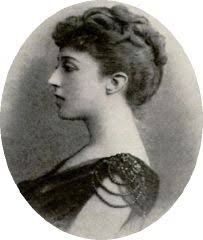
Violet Florence Martin was born in Ross House, Connemara, County Galway on the 11th of June 1862. She was the youngest of 16 children. The family were well to do and belonged to one of the 14 Tribes of Galway. 

Violet had a talent for writing. In her lifetime she wrote 13 novels with her cousin, Edith Somerville. Together the pair published as Somerville and Ross. The pair lived together in County Cork after first meeting in 1886. Their writing was responisble for inspiring the popular television series, The Irish R.M.

Violet was a suffragette and staunch unionist, working closely with the Munster Womens Franchise League. She was on good terms with the members of the Gaelic literary revival.

Violet died on the 21st of December 1915 from complications resulting from a bad horse riding injury some years prior. 


Associated communities

Ross (Galway)

Our aim is to connect all people with a link to Ross (Galway). You may live here, have visited here or maybe are tracing ancestors who left long ago. In any case, we’re sure to have lots to share and are delighted to welcome you.

Other ancestors in this community

Buildings in this community

  • Leenane, Co. Galway

    Location: Ross (Galway)

    Leenane, Co. Galway

Timeline events in this community

  • 1830s

    Ross aka Feara CONG in the 1830s

    <p>A snapshot of pre-famine local history, as described by Samuel Lewis in the "Topographical Dictionary of Ireland" 1837.</p>

    1 Jan 1837

  • 1880s

    Massacre at Maumtrasna

    <p>In 1882, the little settlement of Mám Trasna was situated in County Galway. Maamtrasna is a part of Connemara, hemmed in on the east by Lough Mask, and north, south, and west by high mountains, so that access can only be gained to it by ferry-boat. In 1898, a reconfiguration of county boundaries placed Maumtrasna in County Mayo. But no reconfiguration or reworking of boundaries would wipe away the memory of the primitive act of barbarism which occurred at this deceptively idyllic spot...</p>

    17 Aug 1882