Back to ancestor search
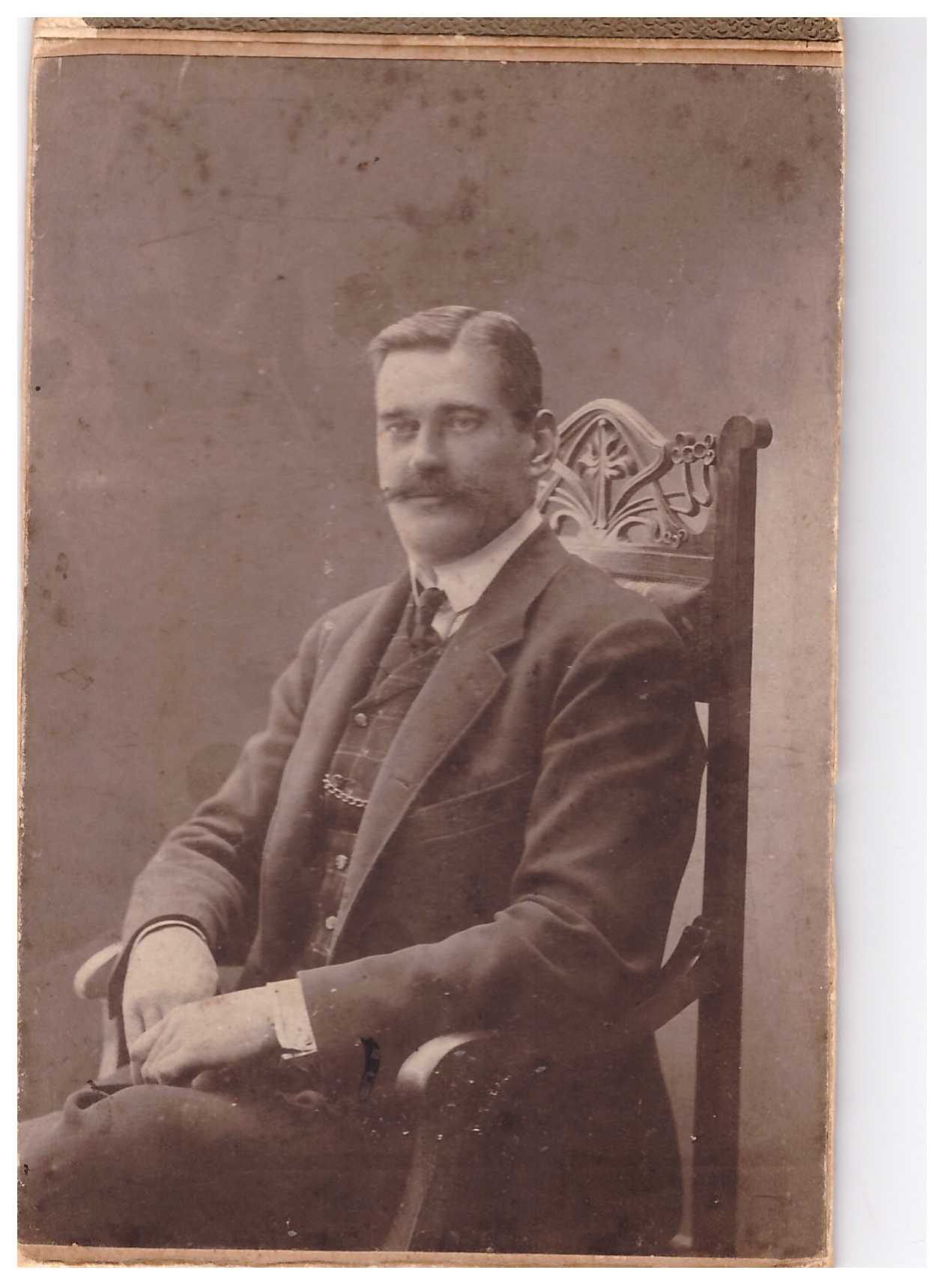
Sir William R Wills Wilde

Sir William R Wills Wilde

Born
1815-03-01 12:00:00
Died
1876-04-19 12:00:00
Gender
Male

Sir William Wilde (1815-76) was the father of Oscar Wilde. However, he was not only a distinguished archeologist and statistician but also a dominant figure in otology and ophthalmology at the Dublin School of Medicine.  Dr. Wilde lived in an age of change - born in the year of Waterloo, he was a student in the days of body-snatching, worked in the horrors of the famine years, and lived to see the birth of antiseptic surgery. The years of his prime were the heyday of Dublin medicine and he was styled ‘the father of Otology’ (first to put aural surgery on a scientific basis).

Sir William Wills Wilde

Oscar Wild

Lady Jane Wilde; Sir William Wild's Wife

Wilde was born in the parish of Kilkeevin, near Castlerea. He was educated at Elphin Diocesan School, at Banagher (the school formerly principaled by Arthur Bell Nicholls, husband of Charlotte Brontë),  at Dr. Steevens’ Hosp., (where he qualified BM, 1837) and at Moorfields Eye Hospital, London (with visits to Vienna, Berlin, and Heidelberg where he learned of scientific advances in ear, nose and throat [ENT] treatment, 1838-41). Prior to becoming an ENT Surgeon, he worked with Charles Lever to relieve patients of cholera epidemic in Connacht, reputedly performing an emergency tracheotomy on a child with pocket-scissors.

Arthur Bell Nicholls

Charlotte Bronte

Dr. Steevens' Hospital

Moorfields Eye Hospital

Charles Lever

In 1841 he was appointed Medical Commissioner to the Irish Census, 1841 (a post which he retained for the following census of 1851) collecting categories of information not included in other national censuses of the period. He was knighted by Queen Victoria in 1864 for work on the Irish Census in which he provided exemplary data covering years including the famine period [viz., tables on Famine mortality].

Queen Victoria

In 1844, he established Molesworth St. Hospital and later set up St Mark’s Ophthalmic Hospital at his own expense (at the rear of TCD; adjacent to Great Brunswick St.), which he later incorporated with the Victoria Eye and Ear Hospital (Pembroke Rd.). St Mark's pioneered Aural Teaching for years in the British Isles.

His surgical reputation was built on his performance of the mastoiditis operation. Like most of his ophthalmologic contemporaries he believed that eyestrain led to visual impairment. He wrote:

"In these days of forced education on the one hand, when unhappy children are compelled, both by parents and teachers, to pore over books, often of very small type, for hours and hours together, with the head bent, the shoulders stooped, the abdomen compressed, and the legs often dangling in the air, in crowded, badly illuminated, and illventilated apartments;— when young ladies in the upper circles, and those girls in the middle ranks who are preparing to be governesses and teachers, are obliged to "practice" and read music for five and six hours a day;—when young gentlemen are induced, either by threats or emulation, to read for eight and ten hours a day, and in addition several hours of the night, under the glare of a strong gas light, in order to uphold the character of a school or master at the risk—often at the expense of sight and life—when on the other hand, unfortunate tradesmen are compelled by low wages, the high price of provisions, and scarcity of work, to support their almost starving families by working in dark, damp cellars and garrets for fourteen or sixteen hours a day;—and when poor seamstresses and milliners are necessitated by the fashionable luxuries of the upper classes to work for no less than eighteen hours out of the twenty-four;—and when we add to this the various factories and private trades which require the continuous application of the eye to minute objects, we wonder not that near-sightedness and impaired or altered vision should be now so common amongst us."

In 1853, he was appointed Surgeon Oculist in Ordinary to the Queen in Ireland, the first position of its kind. In 1854 his son, Oscar Wilde, the famous writer and poet was born in Dublin. In 1862, William Wilde purchased 170 acres of the Ballymacgibbon estate, where he built Moytura House and it was here that Oscar Wilde spent all his summers until his early twenties.

He lectured at the YMCA on “Ireland Past and Present: The Land and the People” (1864) - describing the present as a ‘the transition stage’, and urging that they were where ‘living under the mildest government in the world, a truly regal republic’.

PERSONAL LIFE

Wilde was involved in a suit instigated by his wife against Mary Josephine Travers (with whom he had an affair when she was an ear patient, 1854-60, and who wrote a scurrilous pamphlet characterising him as Dr. Quilp, with charges of raping a patient under chloroform). Travers - for whom Isaac Butt acted as counsel - received a ha’penny damages, and costs of £2,000 against Wilde in Dec. 1864; Sir William retired from practice afterwards. Wilde was reputedly the ‘dirtiest man in Dublin’, causing Shaw to remark that Sir William was ‘beyond soap and water as his Nietzschean son was beyond good and evil’. Outside of his marriage, he fathered a boy (Henry Wilson) and two girls (Emily, b.1847, and Mary, b. 1849), who were reared by his brother Rev. Ralph Wilde. Wilde's heavily mortgaged estate was paid off by Henry, his natural son who (trained by his father) had followed him into the opthalmic profession.

Isaac Butt

From this time onwards, Wilde began to withdraw from Dublin to Moytura, his house overlooking Lough Corrib, in Connemara. In 1873, he was awarded the Cunningham Medal of the RIA.

He died aged 61 in 1876 is buried in Mount Jerome cemetery, Dublin. A plaster bust of Wilde by an unknown hand is displayed in Royal Victoria Eye & Ear Hospital, Dublin.  Moytura House still extant was at one time owned by U2's The Edge.

William Wilde Memorial in Mount Jerome Cemetery


ALSO READ

Associated communities

Mayo

County Mayo, or Maigh Eo in Irish, is located in the west of Ireland.  We are home to Ashford Castle, Croagh Patrick and the fabulous town of Westport.  Our county town is Castlebar and we have a population of approximately 130,000.  We look forward to helping you connect with your ancestors’ place of origin.

Other ancestors in this community

Buildings in this community

  • St Marys Church, Curraghmore, Bofeenaun, Co. Mayo

    Location: Mayo

    Curraghmore, Bofeenaun, Co. Mayo

  • Workhouse Belmullet, Mayo, Ireland

    Location: Mayo

    Belmullet, Co. Mayo, Ireland

  • Knockmore RC Church

    Location: Mayo

  • Old National School, Lisaniska, Mayo

    Location: Mayo

    Foxford F26 EY28

Timeline events in this community

  • 1830s

    Kilcoleman Costello in the 1830s

    <p>A snapshot of pre-famine local history, as described by Samuel Lewis in the "Topographical Dictionary of Ireland" 1837.</p>

    1837-01-01 12:00:00

  • 1820s

    Kildavnet Freeholders List

    <p>A unique Census Substitute for the townland of Carrickkildavnet aka Kildavnet in 1829. This Freeholders List can provide useful information about those who held enough land to register to vote. While the smaller tenant farmers who suffered most during the Great Famine won't appear on this list, there may be a few surprises included here (that didn't appear on Tithe applotment records). These could be partners on a freehold lease. Can you find your ancestor's name below?</p>

    1829-06-01 12:00:00

  • 2020s

    Moses Keady/Kedey pre 1827

    <p>I am looking for ancestors across both Mayo and Donegal Parish for name Kedey, Keady (sp). Specifics below in text.</p>

    2022-01-01 12:00:00

  • 1830s

    Night of the Big Wind

    <p><a href="https://www.irishcentral.com/roots/history/night-of-the-big-wind-ireland-1839">https://www.irishcentral.com/roots/history/night-of-the-big-wind-irelan…</a></p>

    1839-01-06 12:00:00

Roscommon

County Roscommon, or Ros Comáin in Irish, is located in the western region of Ireland. We are home to the stunning Lough Key Forest Park and statistically, we are known to have the longest life expectancy of any county in Ireland! We look forward to helping you connect with your ancestors’ place of origin.

Other ancestors in this community

Buildings in this community

  • Ballaghaderreen TOWN PLAN

    Location: Roscommon

    Ballaghaderreen, Co Roscommon, Ireland

  • Ballaghaderreen TOWN

    Location: Roscommon

  • Pre-1840 Tenant Map of Drumbrick, Glooria, Drumanilra, Gortleck, and Cloonkeen

    Location: Roscommon

    Cavetown, Croghan, Boyle, Co Roscommon

  • Carrowmore Tenant Map 1818

    Location: Roscommon

    Carrowmore, Croghan, Co Roscommon

Timeline events in this community

  • 1830s

    Kilcoleman Costello in the 1830s

    <p>A snapshot of pre-famine local history, as described by Samuel Lewis in the "Topographical Dictionary of Ireland" 1837.</p>

    1837-01-01 12:00:00

  • 1740s

    Elphin Census of Tibohine Parish

    1749-01-01 12:00:00

  • 1760s

    Religious Census of Killukin, Creeve & Tumna

    <p>In March 1766, the Irish House of Lords instructed Church of Ireland parish clergy to compile ‘a list of the several families in their parishes’ – to record the religion of the householders and to identify any Roman Catholic priests and friars living in their area. Although most of the original 1766 religious census returns were destroyed Dublin's Public Records Office fire of 1922, a few fragments survived.</p>

    1766-04-15 12:00:00

  • 1760s

    Religious Census of Killummod

    <p>In March 1766, the Irish House of Lords instructed Church of Ireland parish clergy to compile ‘a list of the several families in their parishes’ – to record the religion of the householders and to identify any Roman Catholic priests and friars living in their area. Although most of the original 1766 religious census returns were destroyed Dublin's Public Records Office fire of 1922, a few fragments survived.</p>

    1766-03-01 12:00:00

Dublin

The capital city of Ireland, Dublin aka Baile Átha Cliath, gives its name to the whole county.  It is home to Guinness, Phoenix Park and the Book of Kells.  We have a population of approximately 1,904,806.  We look forward to helping you connect with your ancestors’ place of origin.

Other ancestors in this community

Buildings in this community

  • South Dublin Union

    Location: Dublin

  • St Matthew's church, Irishtown

    Location: Dublin

    Irishtown Road, Irishtown

  • Church of the Assumption, Ballyboughal, County Dublin

    Location: Dublin

    Ballyboughal village, County Dublin, Ireland

  • Ancestral Home of James Joseph McDonald

    Location: Dublin

    44 St Joseph's Place, Dublin, Ireland

Timeline events in this community

  • 1910s

    Easter Rising Compensation Claims

    <p>The Property Losses (Ireland) Committee, 1916 (PLIC) was established in June 1916 to assess claims for damages to buildings and property as a result of the destruction caused by the 1916 Rising. </p>

    1916-01-01 12:00:00

  • 1800s

    Wilson's Dublin Directory

    <p><strong>IrishAncestors.ie offers a free database indexing names appearing in<em> </em>Wilson’s <em>DUBLIN DIRECTORY 1803 (one of </em>three separate directories of <em>The Treble Almanac).</em></strong></p>

    1803-01-01 12:00:00

  • 1860s

    'New' Catholic Church Donnybrook

    <p>A new Catholic Church opened in Donnybrook. Co. Dublin, "Church of the Sacred Heart" completed and consecrated in 1866</p> <p>The previous Church had been in Donnybrook village, adjacent to the current Garda Station.</p>

    1866-01-01 12:00:00

  • 1830s

    Tallaght DUBLIN in the 1830s

    <p>A snapshot of pre-famine local history, as described in the "Topographical Dictionary of Ireland" by Samuel Lewis, 1837.</p>

    1837-01-01 12:00:00

Elphin (Roscommon)

Our aim is to connect all people with a link to Elphin (Roscommon). You may live here, have visited here or maybe are tracing ancestors who left long ago. In any case, we’re sure to have lots to share and are delighted to welcome you.

Other ancestors in this community

Buildings in this community

  • Bishop Hodson's Grammar School

    Location: Elphin (Roscommon)

    Elphin, Roscommon

  • Smithhill ELPHIN

    Location: Elphin (Roscommon)

    Ardgowna, Elphin, Co. Roscommon

  • Rathcroghan Mound

    Location: Elphin (Roscommon)

    Tobberory, Tulsk, Castlerea, Co. Roscommon

  • Raheen House ELPHIN

    Location: Elphin (Roscommon)

    Raheen, Elphin, Co. Roscommon

Timeline events in this community

  • 1820s

    Distressed Poor of Estersnow & Kilcolagh

    <p>Roscommon &amp; Leitrim Gazette</p>

    1822-06-01 12:00:00

  • 1830s

    County Roscommon in the 1830s

    <p>A snapshot of pre-famine local history, as described in the "Topographical Dictionary of Ireland" by Samuel Lewis, 1837. (The information collected here was submitted by members of the local gentry and clergy of the time).</p>

    1837-01-01 12:00:00

  • 1830s

    Tithe Applotment Survey of Elphin

    <p>Compiled in the 1820-30s, tythes were a form of local tax for occupiers of agricultural land. Anyone with a holding of land greater than 1 acre was obliged to pay tithes as maintenance for the Church of Ireland (then responsible for poor relief in the parish). The tithes were calculated on the average price of oats (the principal type of "corn" grown in this district at that time) for the 7 years ending in November 1821.</p>

    1835-10-15 12:00:00

  • 1830s

    The Diocese and Parish of Elphin in 1837

    1837-01-01 12:00:00

Kilkeevin (Roscommon)

Our aim is to connect all people with a link to Kilkeevin (Roscommon). You may live here, have visited here or maybe are tracing ancestors who left long ago. In any case, we’re sure to have lots to share and are delighted to welcome you.

Other ancestors in this community

Buildings in this community

  • St. Joseph's Church KILKEEVIN

    Location: Kilkeevin (Roscommon)

  • Castlerea Workhouse

    Location: Kilkeevin (Roscommon)

    Greenfield Road, Castlerea, Co. Roscommon

  • Clonalis House CASTLEREA

    Location: Kilkeevin (Roscommon)

    Castlerea, County Roscommon, Ireland

Timeline events in this community

  • 1830s

    Kilkeevan in the 1830s

    <p>A snapshot of pre-famine local history, as described in the "Topographical Dictionary of Ireland" by Samuel Lewis, 1837.</p>

    1837-01-01 12:00:00

  • 1830s

    Castlerea Town in the 1830s

    1837-01-01 12:00:00

  • 1850s

    Griffith's Valuation of Castlerea Union

    <p>The primary valuation of Ireland or Griffith's Valuation is a useful Census substitute for 19th-century Ireland. To confirm whether an ancestor could possibly be the individual listed, it is helpful to know the survey completion date for a parish (or the part of it that fell within the Poor Law Union surveyed).</p>

    1857-04-16 12:00:00

  • 1910s

    Anti Conscription Rally in Ballaghderreen, Co. Roscommon.

    <p>A crowd of approximately 15,000 turned out at a monster rally that was addressed by, among others, John Dillon and Éamon de Valera who were met at the train station by a band and body of Volunteers. Were your ancestors there? If they lived in North Roscommon, Mayo East, Sligo, or East Galway, it's quite possible. If so, post your connection at the bottom of this page.</p>

    1919-05-05 12:00:00

St Marks (Dublin)

Our aim is to connect all people with a link to St Marks (Dublin). You may live here, have visited here or maybe are tracing ancestors who left long ago. In any case, we’re sure to have lots to share and are delighted to welcome you.

Other ancestors in this community

Buildings in this community

  • The Picture House GRAFTON ST

    Location: St Marks (Dublin)

    72 Grafton Street, Dublin 2

  • The Theatre Royal HAWKINS ST

    Location: St Marks (Dublin)

    Hawkins Street, Dublin 2

  • Nichols' Undertakers

    Location: St Marks (Dublin)

    29/31 Lombard St E, Dublin, D02 C2W8

  • Westland Row Post Office

    Location: St Marks (Dublin)

    44 Westland Row, Dublin 2, D02 W274

Timeline events in this community

  • 1930s

    Theatre Royal opens in Hawkins Street

    <p>Dublin's fifth (and last) Theatre Royal opened in Hawkins St in 1935 with Seán Lemass and Lord Mayor of Dublin Alfie Byrne officiated at the "Gala Opening". With an audience capacity of 4,000, it was billed as the largest in Europe at that time.</p>

    1935-09-23 12:00:00

  • 1830s

    Dublin Banking in the 1830s

    <p>Excerpt from Lewis' Topographical Dictionary of Ireland for the metropolis of Dublin (pub. 1837). For more snapshots of pre-famine local history for Dublin city parishes, see below.</p>

    1837-01-01 12:00:00

  • 1500s

    Dublin in the 16th Century

    <p>Excerpt from Lewis' Topographical Dictionary of Ireland for the metropolis of Dublin (pub. 1837). For more snapshots of pre-famine local history for Dublin city parishes, see below.</p>

    1504-01-01 12:00:00

  • 1830s

    Dublin Military Barracks in the 1830s

    <p>Excerpt from Lewis' Topographical Dictionary of Ireland for the metropolis of Dublin (pub. 1837). For links to more snapshots of pre-famine local history for Dublin city parishes, see below.</p>

    1837-01-01 12:00:00

Cong (Mayo)

Our aim is to connect all people with a link to Cong (Mayo). You may live here, have visited here or maybe are tracing ancestors who left long ago. In any case, we’re sure to have lots to share and are delighted to welcome you.

Other ancestors in this community

Buildings in this community

  • The Quiet Man Museum, Cong, Co. Mayo

    Location: Cong (Mayo)

    Circular Rd, Cong, Cong, Co. Mayo

  • Cong Abbey

    Location: Cong (Mayo)

    Abbey St, Cong South, Cong, Co. Mayo

  • Pat Cohen's Bar Cong

    Location: Cong (Mayo)

    Main St, Cong North, Cong, Co. Mayo, F31 XR57

  • Ashford Castle CONG

    Location: Cong (Mayo)

    Cong, County Mayo, Ireland

Timeline events in this community

  • 1830s

    Ross aka Feara CONG in the 1830s

    <p>A snapshot of pre-famine local history, as described by Samuel Lewis in the "Topographical Dictionary of Ireland" 1837.</p>

    1837-01-01 12:00:00

  • 1830s

    Cong in the 1830s

    <p>A snapshot of pre-famine local history, as described by Samuel Lewis in the "Topographical Dictionary of Ireland" 1837.</p>

    1837-01-01 12:00:00

  • 1880s

    Massacre at Maumtrasna

    <p>In 1882, the little settlement of Mám Trasna was situated in County Galway. Maamtrasna is a part of Connemara, hemmed in on the east by Lough Mask, and north, south, and west by high mountains, so that access can only be gained to it by ferry-boat. In 1898, a reconfiguration of county boundaries placed Maumtrasna in County Mayo. But no reconfiguration or reworking of boundaries would wipe away the memory of the primitive act of barbarism which occurred at this deceptively idyllic spot...</p>

    1882-08-17 12:00:00