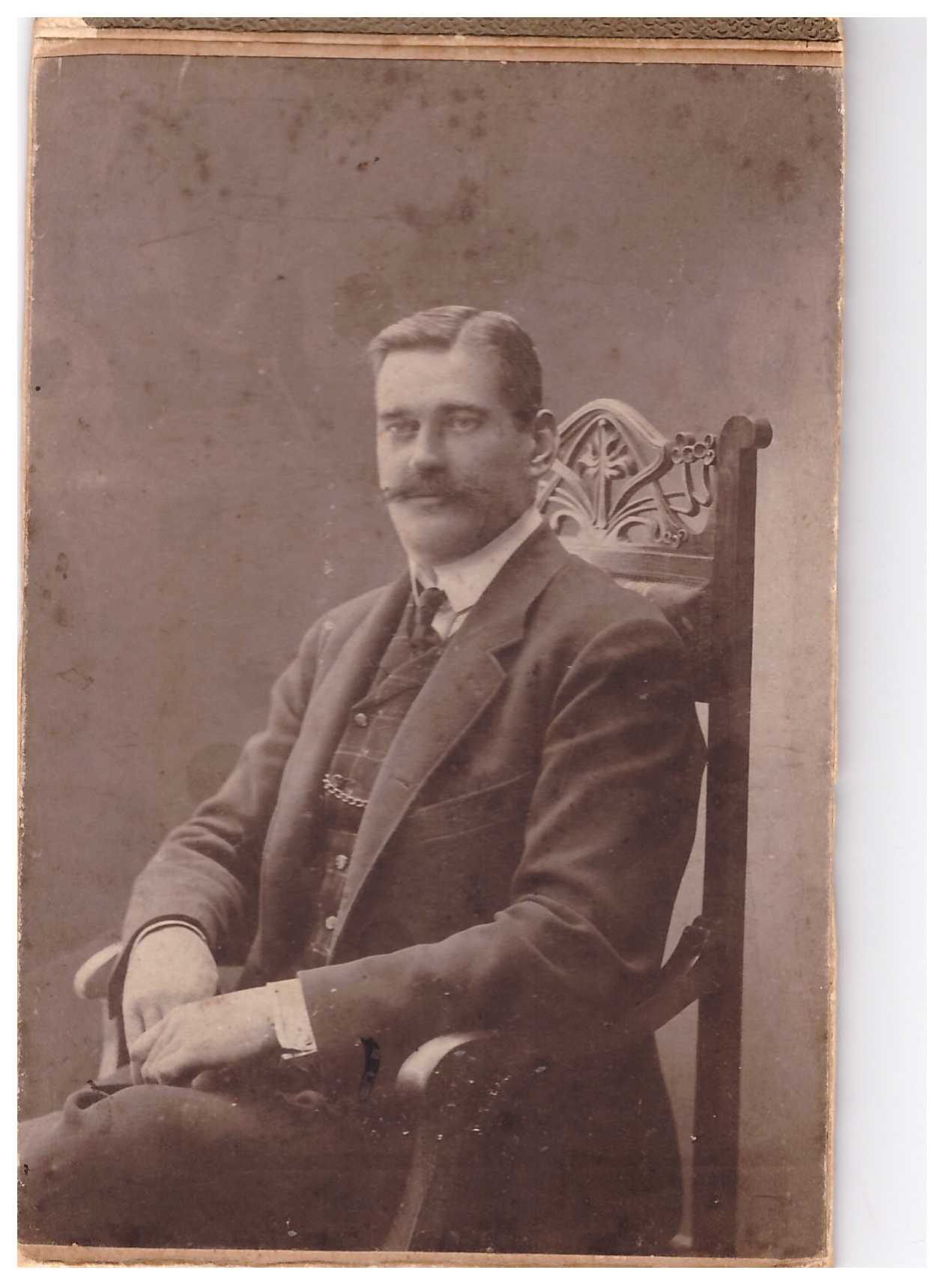
Richard Gough
- Born
- 1827-01-01 12:00:00
- Died
- 1906-09-01 12:00:00
- Gender
- Male
- Place of migration
- Migrated to/Born in Australia
Richard Gough was transported to Australia on the convict ship Lord Auckland which arrived Hobart, Tasmania on 25 August 1846. He had been convicted of the theft of four stone china plates the property of Thomas Higginbotham at the Dublin Recorder sessions Dublin City on 29 December,1845. His sentencte was 7 years transportation to the penal colony, Hobart, Australia.
He was originally imprisoned in Newgate Prison on the 20 November 1845 with the Prison Register showing him as being 18 years of age so it is assumed he was born in 1827. After conviction he was transferred to the Smithfield Convict Depot, Dublin on 31 December, 1845 awaiting transportation, which occurred on the 25 April, 1846.
Richard served his seven years and was declared a free man on the 29th December, 1852, and by then he had married Rossana Flynn in Hobart, Tasmania on the 29 December, 1851. Rossana was also a convict from Antrim, and together they had four children; Robert Gough born Hobart 30 August, 1853; Mary Ann Gough born Hobart 26 October, 1856 (D Adelaide 23 November, 1908); Albert Augustus Gough born Launceston 23 January, 1860 (D Launceston 20 January,1861; and, Edmund Charles Gough born Launceston 4 July, 1861 (D 27 July, 1945) Broken Hill). Rossana died in Melbourne on 18 December, 1874 and Richard died in Sydney September, 1906.
Sometime between October, 1856 and January 1870 the family had moved from Hobart to Launceston in Tasmania where the last two children were born in 1860 and 1861. They then moved to Melbourne, Australia where Rossana died in 1874. There it is believed that Richard married or lived with a Jane Green who may also have been an Irish immigrant. After this there is evidence that the family moved to Adelaide, South Australia where dlaughter Mary Ann Gough married a George Roberts in June, 1884. Nothing is known of Richard's movements until he was committed to an asylum for the elderly in Liverpool, New South Wales, Australia in1900 whereat he died on 13 November, 1906. Also, nothing is known of what became of his eldest son Robert Gough, however, Edmund Charles Gough married an Elizabeth Pretty in Menindee, New South Wales, Australia in November, 1886, where he died in September, 1945, Edmund and Elizabeth had two sons and three daughters and it is this line to which my Wife Wendy belongs.