
Back to ancestor search
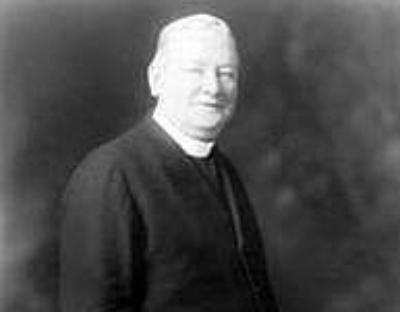
Peter Yorke

Peter Yorke

Born
1864-08-13 12:00:00
Gender
Male

Peter Yorke was born to Gregory Yorke, originally from Holland. His grandfather Christopher York came to Galway in the early 19th century, building lighthouses and breakwaters in Galway, Aran and Westport


In 1882, after initially schooling at Coláiste Iognáid Galway,[4] Yorke then graduated from St. Jarlath's College in Tuam. He then went to St. Patrick's College, Maynooth, where he studied for four years before being adopted by the Archdiocese of San Francisco. He was ordained in 1887. He was pastor of St. Peter's in 1914.

In San Francisco, he became the editor of The Monitor, the official newspaper of the archdiocese. In 1901, he supported the workers in a Teamsters strike. In 1902, he founded and edited a local newspaper called The Leader.

Yorke was the author of the best-selling textbook The Ghosts of Bigotry, originally republished in San Francisco 1913 from new plates, the originals having been destroyed in the earthquake and fire of 1906. It was the genesis work of the Catholic Truth Society, in response to an anti-Catholic literary campaign by the American Protestant Association, and a frank account of the "Black Myths" of English Protestant opposition to the Roman Catholic Church from the reign of Elizabeth I through to Catholic Emancipation and the Ecclesiastical Titles Act 1851 in the 19th century. Its concluding chapter sets the scene of Catholic resurgence in the USA. The publisher was the Text Book Publishing Company, 641 Stevenson Street.

Yorke is buried at Holy Cross Cemetery in Colma, California.

Every Palm Sunday the United Irish Societies of San Francisco hold a memorial celebration of Peter Yorke at Holy Cross Cemetery. Following the Palm Sunday Mass at All Saints Chapel, there is a short procession to his graveside. There poems, music and speeches celebrate his life.

A short street called Peter Yorke Way in San Francisco, which runs from the junction of Geary Boulevard and Gough Street to Post Street, is named after him. The headquarters of the archdiocese is located at 1 Peter Yorke Way.
Associated communities

Galway

County Galway, Gaillimh in Irish, is located in the Province of Connaught in the West of Ireland. We have a population of approximately 232,000 and look forward to assisting you in the search for your Irish ancestors. 

Other ancestors in this community

Buildings in this community

  • Kilcooly Church Ruins & Cemetery

    Location: Galway

    Kilcooly, Co. Galway, Ireland

  • Portumna Irish Workhouse Centre

    Location: Galway

    St Brigid's Road, Portumna, Galway, H53 EK74, Ireland

  • Portumna Friary

    Location: Galway

    Portumna Demesne, Co. Galway, Ireland

  • Portumna Castle & Gardens

    Location: Galway

    Portumna Demesne, Portumna, Co. Galway, Ireland

Timeline events in this community

  • 1830s

    Kilcroan in 1837

    <p>As described in Samuel Lewis' <em>Topographical Dictionary of Ireland</em> 1837.</p>

    1837-01-01 12:00:00

  • 1820s

    First Census of Inisheer

    <p>The 1821 Census of Inisheer survived the Public Records Office fire. </p>

    1821-04-01 12:00:00

  • 1820s

    First Census of Inishmaan

    <p>The 1821 Census of Inishmaan survived the Public Records Office fire. </p> <p>Family names featured: </p> <p>Beaty</p> <p>O'Brien</p> <p>Callaghan, Callaughan, Collaughan</p> <p>Carey, Keaghry </p> <p>Clancy</p> <p>Concannon</p> <p>Connor</p> <p>Conneely (Connolly)</p> <p>Cook</p> <p>Costelloe</p> <p>Curreen</p> <p>Collins</p> <p>Dignum</p> <p>Dirrane (Derrane)</p> <p>O'Donnell</p> <p>Faherty</p> <p>Flaherty</p> <p>Fitzgerald</p> <p>Flemon (Fleming)</p> <p>Folan</p> <p>Ginnane</p> <p>Glinn (Glynn)</p> <p>Grealish, Grelish</p> <p>Griffy</p> <p>Higgins</p> <p>Joyce</p> <p>Kane, Kean, Kine</p> <p>Keating</p> <p>King</p> <p>Linnane</p> <p>Maher</p> <p>McDonough</p> <p>Mulkern (Mulkerrin)</p> <p>Murry (Murray)</p> <p>Prendergast</p> <p>Scahill</p> <p>Sullivan</p> <p>Welch</p> <p> </p>

    1821-04-01 12:00:00

  • 1830s

    Arranmore, Ennismain and Innishere in 1837

    <p>As described in the "Topographical Dictionary of Ireland" by Samuel Lewis, 1837</p>

    1837-01-01 12:00:00

Peter Yorke