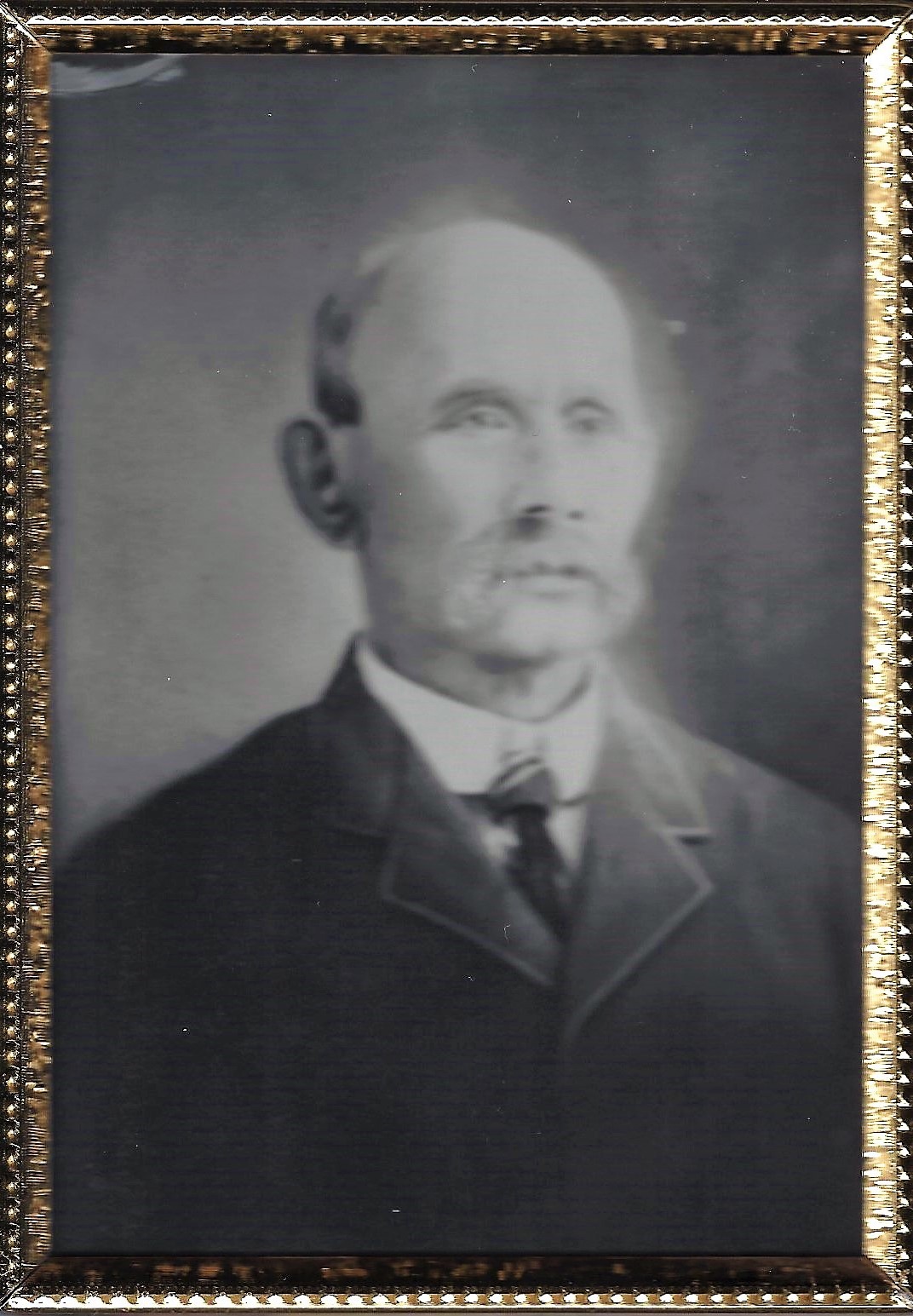
Michael Thomas Casey Jr.
- Born
- 1865-09-02 12:00:00
- Died
- 1907-09-04 12:00:00
- Gender
- Male
- Place of migration
- Migrated to/Born in USA
On 2 Sept. 1865, Michael Thomas Casey Jr. was born on a Cloghbrack, Upper, farm, in County Galway, not far from the shores of Lough Mask. The Irish word for Cloghbrack is Cloch Bhreac, which means speckled rock.
Michael Jr. was the first child for Michael Thomas Casey Sr. of Cloghbrack, Upper and Mary Carney Casey from the nearby townland of Bohaun. Her parents were William Carney (Kearney) and Margaret Coyne. Michael Sr.’s father was Thomas Casey who died in 1881,
The Caseys lived at the base of Mount Gable, a 1,370-foot mountain between Lough Mask and Lough Corrib. Among the families in Cloghbrack, Upper were the Hallorans, Kerrigans, Flynns and McNamaras, according Griffith’s Valuation of 1855. (Cloghbrack is sometimes spelled Cloughbrack and Cloughbrach.)
Cloghbrack, Upper was not Michael Jr.’s home for long. His father migrated to Youngstown, Ohio, in 1870, and Michael Jr. and his mother made the trip across the Atlantic Ocean the following year.
They became part of the city’s transformation from a small northeastern Ohio town to one of America’s largest steelmaking centers. Lured by the promise of good-paying jobs, thousands of men came from Ireland and other European countries to work in the mills’ blazing furnaces. The city’s population stood at about 8,000 when the Caseys arrived and more than quadrupled by 1890.
The Caseys settled in the city’s Brier Hill neighborhood – so called because it overlooked the Brier Hill Iron Works, where Michael Sr. worked. They lived on Clyde Street, which became home to a number of families from County Galway. The Casey family helped found St. Ann’s Catholic Church.
Michael Jr. had blond hair and blue eyes, a thick neck and strong, powerful arms – the ideal physic for the hard labor of turning pig iron into steel. After completing the eighth grade in Catholic schools, he headed for the mills.
Like his father, Michael Jr. was a member of the Ancient Order of Hibernians, serving as the recording secretary for Division 4 in Youngstown. His connection to the AOH led to him to his wife.
At an AOH picnic in Pittsburgh, Pa., he met Ellen “Nellie” Casey who lived there with her sister Mary. Ellen, not a relation to Michael, grew up on the other side of Mount Gable in the County Galway townland of Ballydoolough. Ellen was born in 1869 and came to the United States when she about 18. Her parents were Peter “Peadar Mor” Casey and Mary Coyne.
Michael and Ellen were married at St. Columba’s Catholic Church on 4 Aug. 1892. They lived next door to Michael Sr. on Clyde Street and had eight children: Thomas Leo, Marguerite, Helen, Peter Raymond, Emmett Michael, William, Mary and Patrick. Peter Raymond and William died during childhood.
Michael Jr. worked in several mills, eventually becoming a heater for Youngstown Sheet and Tube. He also was an active member in the Amalgamated Association of Iron and Steel Workers, a forerunner to the United Steelworkers Union.
Perhaps his involvement in the union and the AOH drew the attention of men who asked Michael Jr. to run for city council. He declined their entreaties, according to my grandfather, Thomas Leo Casey.
Though the United States was their home, Michael Sr. and Michael Jr. remained interested in Irish politics. They helped to organize a United Irish League of America rally in 1903 to support a visit by Irish Parliamentary Party MP Joseph Devlin to Youngstown, according to an article in The Youngstown Vindicator. Devlin’s party worked for Irish Home Rule.
Along with his brother, Patrick, Michael Jr. owned a saloon in the Brier Hill neighborhood. My grandfather said Michael Jr. was a good dancer who loved dancing with Ellen to the song “Casey Would Waltz with the Strawberry Blonde.” Ellen, however, was dark-haired.
Sometime in the summer of 1907, while at work, Michael was hit in the chest by a charging machine. The blow damaged his lungs and he died on pneumonia at his home on 4 Sept. 1907 – two days after his 42nd birthday. Michael never got a chance to hold is youngest son, Patrick, who was born several months after his father’s death.
At the time, there was no workers compensation or Social Security to help the Caseys. Supporting the family fell to the oldest son, Thomas Leo, who dropped out of grade school and went to work in the mills.
Despite the tragedy, the family stayed together and Michael’s and Ellen’s children went on to raise their own families. Ellen had 19 grandchildren when she died in 1952. Those grandchildren in turn raised dozens of great grandchildren.