Jeremiah Darby Grehan
- Born
- 1836-01-01 12:00:00
- Gender
- Male
- Place of migration
- Migrated to/Born in Australia
Jeremiah Darby Grehan was born about 1836 in Castletown, Co. Westmeath. His parents were John Grehan and Rose Annie Wyers, although there is some uncertainty over the correct spelling of Rose’s surname. They had a farm at Toarallen, near Toarlisnamore and not too far from Kilbeggan in Co Westmeath. We know that Darby had two sisters, Anne and Catherine, both of whom came to Australia. It is believed that he had two older brothers, Peter and John.
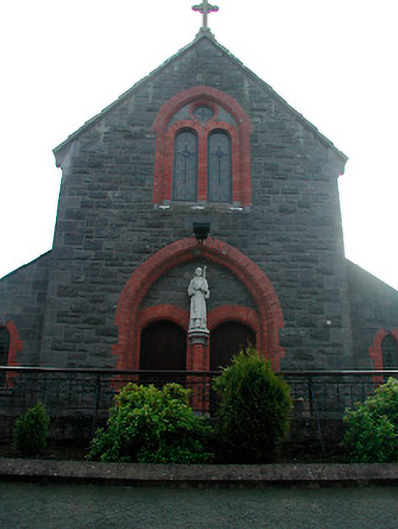
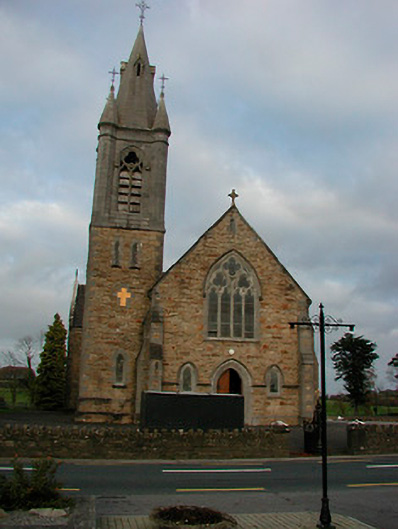
On 15 January 1865, Darby Grehan married Bridget Susannah Brumbaugh Dunne in the chapel at Kilclonfert, Kings County, now Co. Offaly. Bridget had been born at Phillipstown about 1842. Her parents were Charles Dunne, a farmer, and his wife, Bridget Finlay. They had at least one other child, Henry, who had married one of Darby Grehan’s older sisters, Anne, in 1861.
Two events occurred in 1859, which would have a profound effect on the two families. The new colony of Queensland was proclaimed in that year and the Vatican established a new Roman Catholic Diocese in Brisbane and appointed the Irishman, James Quinn, as its first Bishop.
Quinn formulated an idea to establish a Queensland Immigration Society to increase the population of Queensland. It had three objectives:
- Alleviate the distress prevailing in Ireland
- Provide a population capable of developing the great resources of the Colony and supplying an urgent demand for labour in it.
- Secure for single females, immigrating to the Colony, sufficient protection, which was not available under any existing system of immigration.
Over the next few years, a total of thirteen ships brought almost 4,000 settlers to Queensland. The first ship to sail under this scheme was the ill-fated Erin-go-Bragh, which left Cobh, in Cork harbour on 7 February 1862 carrying 431 passengers. This included Bridget Dunne’s brother, Henry, his wife Anne, and their two children, Anne and Bridget.
It was a terrible trip, which took twenty-five weeks, when most ships were completing the journey in about half that time. The ship encountered dreadful weather and, after rounding the Cape of Good Hope, it sprang a leak, which required constant pumping for the remainder of the journey. Fifty-one passengers died on the journey, mainly from typhoid.
It is likely that, despite their terrible voyage, Henry encouraged his sister and brother-in-law to join his family in Queensland. Alternatively, conditions in Ireland were so terrible, and prospects so poor, that they would do anything to escape. Consequently, just over one month after their marriage, Darby and Bridget boarded the “Sunda”, which left Queenstown harbour on 22 February 1865. They were accompanied by Darby’s sister, Catherine. My grandmother (Margaret, nee Grehan, Darby and Bridget’s fifth child) relayed stories about the difficulties experienced by the 500 passengers on that ship, which encountered forty-foot waves in the Bay of Biscay.
They arrived in Queensland on 23 May 1865 after a quite reasonable trip on which only three passengers died. They settled at Waterford, about 33 kilometres south of Brisbane but the land proved difficult for farming. They moved further inland and in October 1870 they selected a parcel of land at Veresdale Scrub Road, Veresdale, adjacent to where Henry and his family were farming. It was subsistence farming, at best, and they had a difficult time living in a bark hut with dirt floors. This was about 60 kilometres south of Brisbane.
Darby and Bridget had eight children. Mary Anne (3 November 1865), John (6 December 1868), Catherine (12 October 1870), Bridget Evelyn (12 June 1872), Margaret (28 April 1874), Rosetta Cecilia (2 August 1876), Theresa (14 September 1878), and James Charles ( 18 April 1882)Sadly, the marriage broke down just after Christmas 1884 and the property was sold and Bridget and the children moved to the nearest town, Beaudesert, for a number of years.
Darby seems to have abandoned the family about 1886 and nothing is known about what he did for the next few years. Eventually, he returned to Ireland and this may have been about 1906. It is believed that he died in April 1927 and, that he is buried in the Mullingar cemetery.
In about 1900, John Grehan, the eldest son of the family, had a house built for his mother at Bowen Hills, an inner suburb of Brisbane.