
Back to ancestor search
Henry Dunne

Henry Dunne

Born
1855-07-16 12:00:00
Died
1895-01-01 12:00:00
Gender
Male
Place of migration
Migrated to/Born in UK

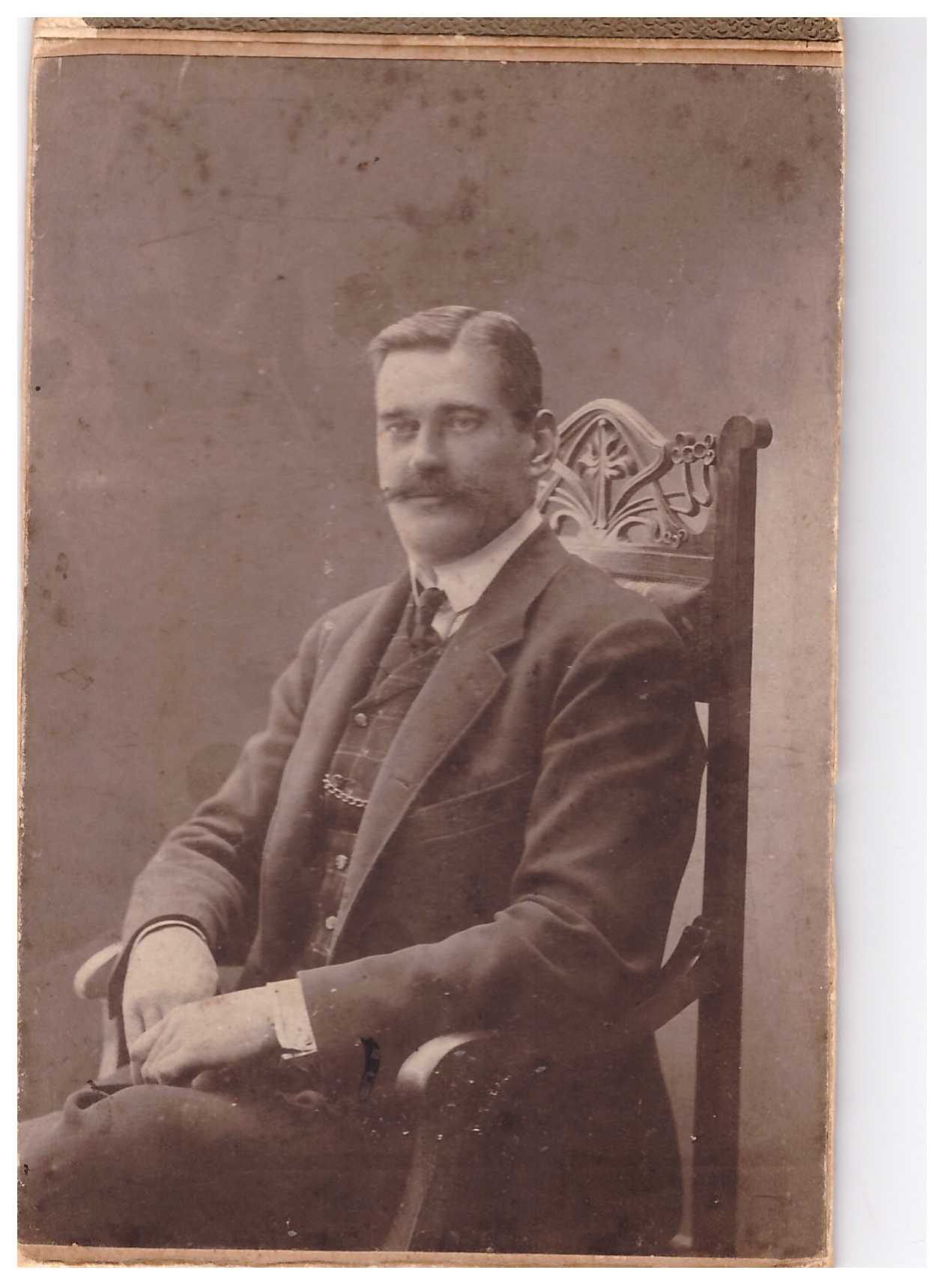
Henry was born in Dublin in 1855. He Joined the Royal Navy in 1873 (aged 17) and was moored in Falmouth, Cornwall where he married and had five children with wife Catherine Painter. The family returned to Dublin 1892 and their youngest daughter Frances Dunne was born there. He passed away sometime before 1898.
Associated communities

Dublin

The capital city of Ireland, Dublin aka Baile Átha Cliath, gives its name to the whole county.  It is home to Guinness, Phoenix Park and the Book of Kells.  We have a population of approximately 1,904,806.  We look forward to helping you connect with your ancestors’ place of origin.

Other ancestors in this community

Buildings in this community

  • South Dublin Union

    Location: Dublin

  • St Matthew's church, Irishtown

    Location: Dublin

    Irishtown Road, Irishtown

  • Church of the Assumption, Ballyboughal, County Dublin

    Location: Dublin

    Ballyboughal village, County Dublin, Ireland

  • Ancestral Home of James Joseph McDonald

    Location: Dublin

    44 St Joseph's Place, Dublin, Ireland

Timeline events in this community

  • 1910s

    Easter Rising Compensation Claims

    <p>The Property Losses (Ireland) Committee, 1916 (PLIC) was established in June 1916 to assess claims for damages to buildings and property as a result of the destruction caused by the 1916 Rising. </p>

    1916-01-01 12:00:00

  • 1800s

    Wilson's Dublin Directory

    <p><strong>IrishAncestors.ie offers a free database indexing names appearing in<em> </em>Wilson’s <em>DUBLIN DIRECTORY 1803 (one of </em>three separate directories of <em>The Treble Almanac).</em></strong></p>

    1803-01-01 12:00:00

  • 1860s

    'New' Catholic Church Donnybrook

    <p>A new Catholic Church opened in Donnybrook. Co. Dublin, "Church of the Sacred Heart" completed and consecrated in 1866</p> <p>The previous Church had been in Donnybrook village, adjacent to the current Garda Station.</p>

    1866-01-01 12:00:00

  • 1830s

    Tallaght DUBLIN in the 1830s

    <p>A snapshot of pre-famine local history, as described in the "Topographical Dictionary of Ireland" by Samuel Lewis, 1837.</p>

    1837-01-01 12:00:00

St Nicholas Without (Dublin)

Our aim is to connect all people with a link to St Nicholas Without (Dublin). You may live here, have visited here or maybe are tracing ancestors who left long ago. In any case, we’re sure to have lots to share and are delighted to welcome you.

Other ancestors in this community

  • John Daly

    Location: St Nicholas Without (Dublin)

    Born: 1 Jan 1800

  • James Smith

    Location: St Nicholas Without (Dublin)

    Born: 1690-03-19 12:00:00

  • Patrick Robert Neville

    Location: St Nicholas Without (Dublin)

    Born: 1861-05-03 12:00:00

  • Bernard Campbell

    Location: St Nicholas Without (Dublin)

    Born: 1830-08-23 12:00:00

Buildings in this community

  • Clarke's of Francis Street

    Location: St Nicholas Without (Dublin)

    60 Francis Street, Dublin 8

  • St Nicholas of Myra FRANCIS ST

    Location: St Nicholas Without (Dublin)

    The Church of St. Nicholas of Myra, Francis Street, Dublin 8.

  • O'Connor's Pub in Francis Street

    Location: St Nicholas Without (Dublin)

    40 Francis Street, Dublin 8, Ireland

Timeline events in this community

  • 1160s

    The Cambro-Norman invasion of Dublin

    <p>Excerpt from Lewis' Topographical Dictionary of Ireland for the metropolis of Dublin (pub. 1837).</p>

    1169-01-01 12:00:00

  • 1830s

    St. Nicholas Civil Parishes in the 1830s

    1837-01-01 12:00:00

  • 1830s

    Dublin City in the 1830s

    <p>Excerpt from Lewis' Topographical Dictionary of Ireland for the metropolis of Dublin (pub. 1837). For more snapshots of pre-famine local history for Dublin city parishes, see below.</p>

    1837-01-01 12:00:00

  • 1760s

    Christmas Eve in Dublin

    <p>During the reign of the four Georges (aka the Georgian period 1714 – 1830) the Puritan ban on Christmas allowed it become a popular celebration among the people of Great Britain and Ireland again. Some of its fun and charm can be found described this report from Georgian Dublin on Christmas Eve 1760:</p>

    1760-12-24 12:00:00