
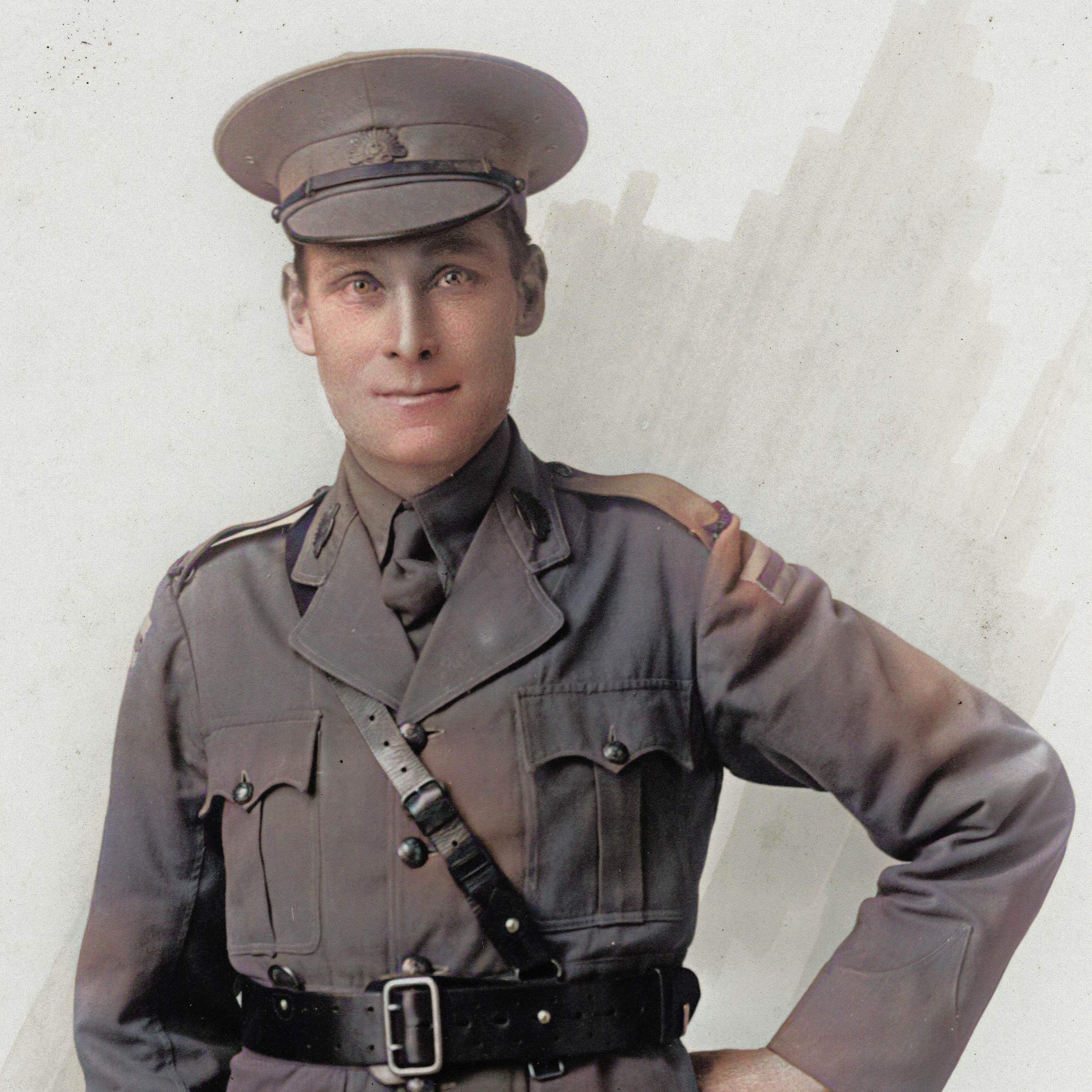
Hector Ellrington McMurtrey
- Born
- 1886-02-01 12:00:00
- Died
- 1919-04-19 12:00:00
- Gender
- Male
- Place of migration
- Migrated to/Born in Australia
1886
Born February 1886 in Kaneira Victoria as the 11th child and 4th son of the late John and Elizabeth McMurtrie
His father died on 19th December 1910 and his mother died on 6th January 1916
Kaneira was a small township, originally called Sutherland's Town, which had grown in the 1890s as selectors moved into the surrounding district. Despite opposition in Parliament the railway was extended in 1893-94, firstly from Wycheproof to Kaneira then to Sea Lake. The line to Kaneira was built by men from Melbourne put out of work in the 1890s depression. A canvas town sprang up at Kaneira to house the workers, among them some described as "rowdies", requiring two constables to be stationed in the town. These men were allegedly responsible for what has become known as the "Kaneira Riots" in which a group of navvies took over the town and wrought havoc. A pitched battle with the police ensued during which a rioter was shot in the leg. He later died of the wound in Wycheproof Hospital. To provide a source of water for the steam locomotives a 20,000 cubic yard dam was constructed nearby. Unseasonal torrential rain fell that summer and filled the dam as construction was nearly completion. This was later to become Culgoa's community swimming hole. In 1920 Kaneira became Culgoa. A name change was deemed necessary due to the railways' system of consigning goods. The custom was to use the first syllable of the town's name to designate the destination. There was as a result confusion as both Kaneira and Kaniva were designated KAN. As the smaller town Kaneira was forced to change its name - to Culgoa. The name Kaneira remains in the name of the local hotel.
In his late teens, Hector, together with his two brothers, was forced to leave the family farm to get a job and help support the rest of the family. Hector became an Architect, Andrew worked in the Wycheproof General Store and Malcolm took to training and driving trotting horses. Much of this historical background is from Anne McClelland's Strong Hands, Strong Hearts, Kaneira-Culgoa 1890- 1980, (1980)
click on the attached pdf to read more about Hector.


