Eliza Lally
- Born
- 1797-01-01 12:00:00
- Died
- 1866-01-01 12:00:00
- Gender
- Female
- Place of migration
- Migrated to/Born in Australia
Elizabeth Lally (known as Eliza) was born in May 1797. In about 1822 she married Thomas Little (born 1st January 1800). They both appear in the 1821 census, living in the Townland of Carraroe, Parish of Lickerigg. The rest of Eliza’s family were in Knockatogher, Parish of Killtullagh in the 1821 census.
Eliza sailed to India with Thomas, two of his brothers, Robert & William and Eliza’s brother, Michael Lally, when they signed up to join the East India Company Army in mid 1823. They arrived in Bengal mid 1824. The men were all promoted and married there and Eliza and Thomas were the only survivors. Their brothers all died before their 30th birthdays. Thomas became involved with Charles Prinsep, the Advocate General of Bengal and became a shareholder in his Australian Association of Bengal. In December 1837 Thomas, with Eliza and their children, servants, Indian cattle and horses and equipment, sailed for the Swan River, Western Australia, as Charles Prinsep’s agent to buy land and breed horses for the Indian market.
Thomas achieved Prinsep’s aims but left him in 1854 to set up on his own. He had a large farm and was a major wine producer. He was a JP and prominent in local horse racing and local organisations. But Thomas’ and Eliza’s claim to fame was their philanthropy, particularly their support for Catholic and Irish causes. They supported the Sisters of Mercy from Dublin in their charitable work and financed the building of their schools. They gave the land for and largely financed the first Catholic Church in the Western Australian countryside. They supported Irish immigrants, by giving them each 100 acres of land, and supported the groups of workhouse orphan girls.
Eliza died in 1866 and Thomas in 1877. He is still remembered today by many descendants of the Irish immigrants he helped. That area of Western Australia is still noted for the strength of its Catholic population. The church that Thomas built still stands today, as the Thomas Little Memorial Hall.
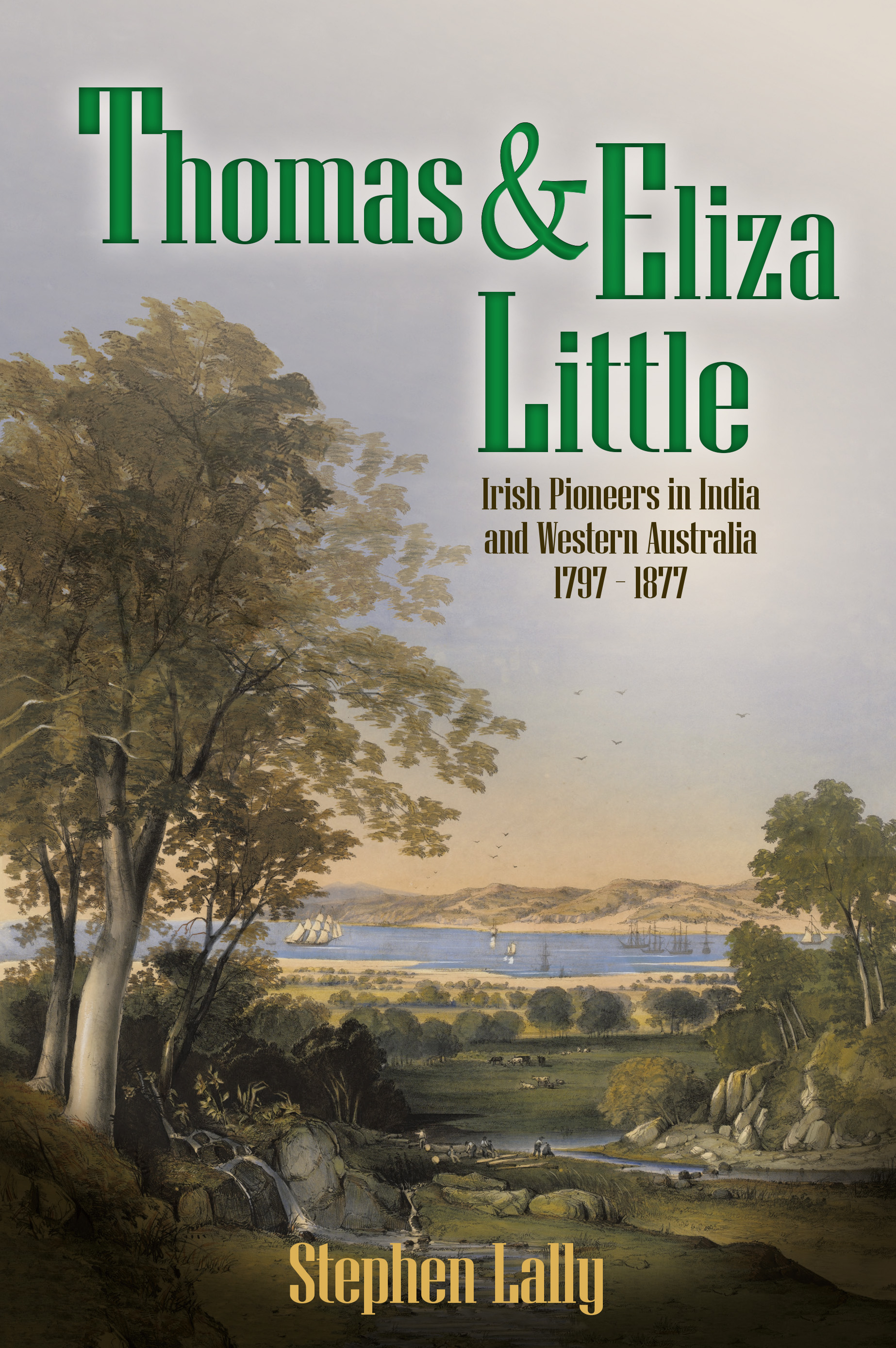
With the help of Kieran Jordan, Stephen Lally has published the biography of Thomas and Eliza ' Thomas & Eliza Little - Irish pioneers in India and Western Australia, 1797 - 1877 '. It is Thomas who is remembered but the book shows that Eliza was a key part of their partnership, an intelligent, active and fun-loving woman. The book is 182 pages and available from amazon. See the attached synopsis of the book.