
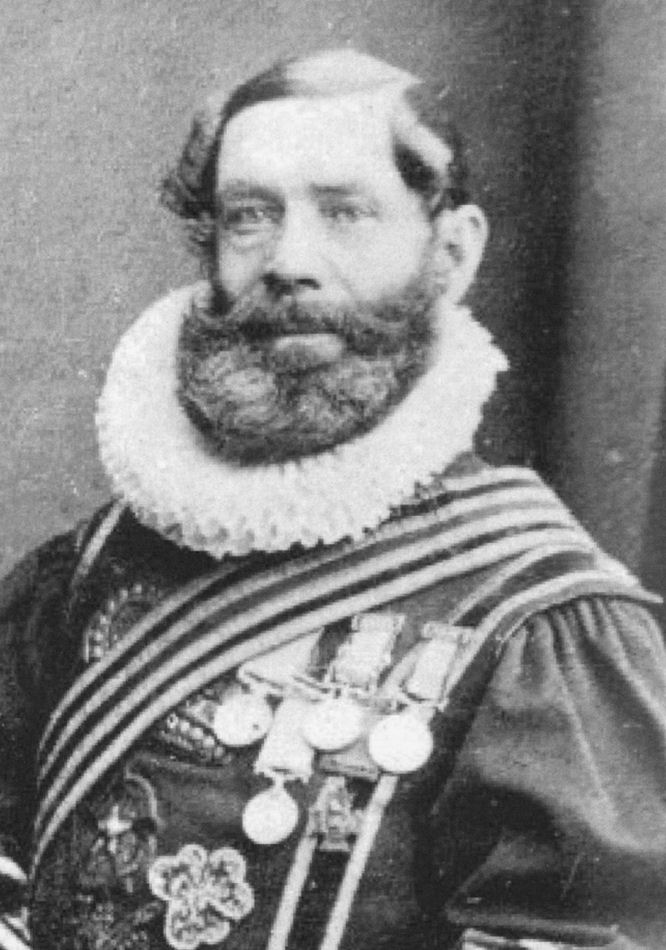
Daniel Cambridge
- Born
- 27 Mar 1820
- Died
- 4 Jun 1882
- Gender
- Male
Daniel Cambridge was born in Carrickfergus, County Antrim, on the 27th of March 1820.
As a young man, Cambridge enlisted in the British military forces. He served in Malta in the 2nd Company, 4th Battalion for 6 years from 1841. After this he was posted to Canada.
On the 7th of August 1849, he married Ann Bigham, an Irish woman living in Canada, with whom he had six children.
The family relocated to England before Cambridge was dispatched to fight in the Crimean War. He was posted to the front in Sebastapol where he fought in the trenches. Reports of his actions there state that he refused to stand down, even when severely wounded, even going back to carry wounded men after he had been ordered to retreat and seek medical aid himself. He carried out all of this under heavy enemy fire. While carrying his last wounded man he was shot in the jaw but continued to bring the man to safety.
For his gallant bravery on that day, Cambridge was awarded the prestigious Victoria Cross.
He was also promoted to Master Gunner with the 8th coastal battery at Athlone, Co. Roscommon.
Cambridge died on the 4th of June 1882 in London. It is believed that his death was caused by the effects of his wounds from Sebastopol. He was buried in an unmarked grave in St Nicholas' Churchyard in Plumstead.

