
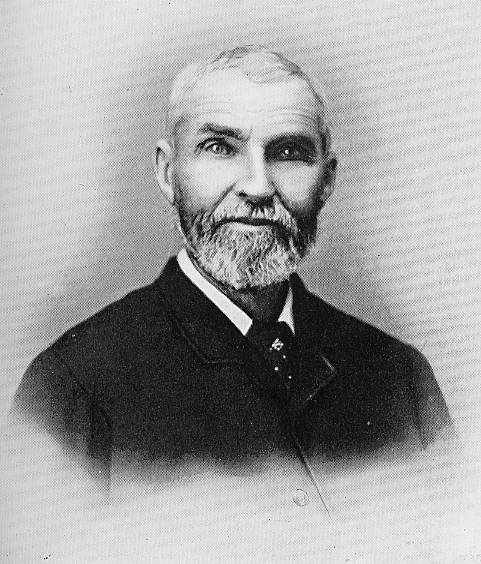
Charles Daly
- Born
- 17 Mar 1832
- Died
- 16 Apr 1903
- Gender
- Female
There are no details about Charles Daly in Ireland save that which is printed below. However, his death certificate shows his father as Martin Daly.
The extract below is from a publication on the survivors of the Birkenhead ship which sank off the South African coast. The book is called "A Deathless Story"
CHAPTER XVIII
FATE OF SOUTH AFRICAN SURVIVORS
There is no armour against Fate. — ^James Shirley.
It sometimes happens that a man who has passed through the gravest perils in his time comes at last to his end by a trifling misadventure. It is a hard fate to befall such a one.
No more melancholy instance of it exists than is furnished by the decease near his veldt home at Mosita, in Bechuanaland, during April, 1903, of that sturdy pioneer settler CHARLES Daly. Mr. Daly's death was caused by the kick of a waggon ox. The veteran was on his way to Vryburg at the time, and the kick, which took effect above the eye, terminated fatally within a few minutes. The unhappy accident aroused far and wide a feeling of keen regret, for Mr. Daly was well known in South Africa and had many friends there and in Australia, England and America, and in Ireland, his native country, who all admired him for his personal qualities and his successful life-work.
To readers of this book, Charles Daly and his adventurous career are matters of interest because he was a survivor of the Birkenhead. He belonged to no branch of the Government service. He was neither soldier nor sailor, nor a police recruit. How came he, then, it will be asked, to be in the Birkenhead when the ship was lost ? The reply is that he was there as a passenger on board — under what circumstances shall be explained presently. He was among those saved from the wreck, and he landed on that occasion, for the first and last time in his life, on the shores of South Africa in his shirt only.
Charles Daly died a rich man, but he began the battle of life a poor lad. He was born at Gort, in Co. Galway, on March 17th (St. Patrick's Day), 1832. His father was a bailiff to Lord Clanricarde, and the family, a large one, was reared on the estate. Things were not very prosperous at home, and young Daly decided that he could better his fortunes by going abroad. Accordingly, he left Ireland while still a boy. In 1849 he landed at Durban. Proceeding up country to Bloemfontein, he secured a clerkship in Mr. Palmer's store. He was not without education, and being a sharp youth and energetic, he soon made headway.
It was necessary that he should know Dutch, in which language, by hard study, he made himself tolerably proficient, thereby laying the foundation of future successes. He was a friend of the local bank manager, and in after years often recalled the " great talks " they had together. Those discussions were animated and sometimes heated — a fact which is not surprising when it is known that whereas the clerk was fired by Ireland's wrongs, and the prevailing notions of redressing them, the banker, on the other hand, was a " rank Tory," and as such beyond hope of conviction ; but the politicians remained good friends.
After spending a year or two in the Free State and saving a little money, young Daly resolved to return home. He set out on the journey, but got no farther than St. Helena, where he was left behind suffering from an attack of fever, on recovering from which he decided to abandon his trip and get back to the Free State. It was now that he joined the Birkenhead, and came to participate in the horrors of her last fatal voyage. When the troopship called at St. Helena on her way south, he got a passage on board with the object of accompanying the vessel round to the Buffalo River. It was a project fated not to be realised, for the historic shipwreck intervened. Charles Daly was of the number who were lucky enough to struggle ashore when the BirkenJ-iead sank off Danger Point, landing, as already mentioned, in his shirt. Desperate adventures were afterwards his along the Kaffir frontiers, but none of them eclipsed the terrors of that black night, the story of which, as told by this survivor, has thrilled eager listeners by many a camp-fire since. Odd that after all he should be reserved for the death which overtook him ! He had completed his 71st year a month earlier, and was still hale and strong when the end came, on April i6th, 1903
Mr. Charles Daly - Photo by W. Klisser, Vryburg
FATE OF SOUTH AFRICAN SURVIVORS page 233
The decrees of Fate were not all unkind to Mr. Daly. We have seen how he was saved from a disaster at sea while so many around him perished, and on land he experienced numerous escapes during his romantic career. Only a year before he died he had the happiness, sweetened by long, long absence, of revisiting his old home in Ireland and sojourning for a space among the well-remembered haunts and still familiar scenes of his boyhood days. True, he was bowed then with the weight of a domestic grief; but that visit must have been a satisfaction and a solace.
After the wreck of the Birkenhead friends came forward and helped Charles Daly, and he again found himself in Bloemfontein. Fortune seemed to smile on him, and it was not long before he fell in love with a Miss Roesch, whom he eventually married, and the union was a happy one. On the Basuto War breaking out he was, in common with others, commandeered for active service ; but being a shrewd business man, he paid £2^^ for a substitute, and, taking a couple of waggons loaded principally with brandy, proceeded with the commando. Everything went well until some of the burghers got rather too merry. A court-martial was then held on him and he was put out of camp, to the sorrow of the jovial spirits there assembled.
I then [he said afterwards] travelled around Thaba-Bosigo to another commando, where I was well received ; but longing to get back to my old camp, I unspanned one morning early and travelled back, although the Basutos were now fully on the war-path and most of the roads closed. About noon of that day I came upon several hundred Basutos, all armed ; to say I was in a great fright is to say the least of it. Upon asking them several questions and eliciting no response, I thought my last hour had come ; this continued until late in the afternoon, when several approached the waggon and asked for food. The relief I felt was so great that I gave them all I had, and they became very friendly towards me. The next morning I appeared before camp and some hundreds of Boers came out and escorted me in with great demonstrations of joy. I was completely forgiven, and the next day had to send my waggons back to Bloemfontein for more goods and brandy.
He described a visit he paid to the Chief Masupha, of the Basutos, during an armistice, in company with another gentleman.
page 234 A DEATHLESS STORY
We proceeded to go up the mountain to visit the chief. We took two bottles of French brandy and several other articles which we thought the chief might like. Upon reaching the footpath by which we had to ascend, we found it to be very difficult, winding through large rocks.
Judge of our surprise when, a little way up, from behind nearly every boulder a Basuto jumped up, fully armed and shouting to us, " Spion ! Spion ! Go back or we will kill you ! " Again I was in a terrible state, but (I expect the old Irish blood asserted itself) eventually thought it best to go forward. Upon reaching the summit we were introduced to Masupha, whom we found seated within a ring of his warriors. I was surprised to see a white man among them who was constantly gibbering and laughing, and as the man had a peculiar fascination for me, I asked who he was, and was informed he was a lunatic ! Our visit being ended, bidding adieu to the chief, we got back safely to camp.
We next find Mr. Daly in Bloemhof, a friend of the President, owner of a large store and a palatial dwelling-house — evidences that times had gone well with him, for he was now an affluent man with branch stores in the country. The Stellaland War breaking out, Charles Daly, being the only man near the line allowed a magazine licence, was a great factor in it, supplying arms, food, etc., to the Transvaal forces, an arrangement which proved lucrative to himself and satisfactory to all concerned. An amusing incident occurred during the war. The notorious Scotty Smith broke intoMr. Daly's magazine, and, in company with several boon companions, " cleared it out," leaving their signatures affixed to a postcard on the door as a token that they would pay for whatever had been taken.
Afterwards in 1884, in Warren's Expedition, Charles Daly was at Pudimoe, near Taungs ; but soon he was obliged to leave, the British Government considering the ground more suitable for the natives and telling him to seek veldt elsewhere. From here he went to his farm Italie, on the Hartz River, where he put up magnificent dwellings, dams, and a garden ; but his restless spirit was not satisfied, and we next find him occupying his Mosita and Molopo farms with great success in cattle ranching. In 1897 the rinderpest came along and swept nearly every living head of cattle away in its path, impoverishing many well-to-do farmers and forcing them to start afresh. The second blow came when Mr. Daly's favourite son, Redmond, died on May 26th, 1898, at the early age of thirty.
FATE OF SOUTH AFRICAN SURVIVORS page 235
Redmond was a fine cricketer, whose record had not been broken at St. Andrews, and a good scholar, having matriculated highly. His death was a blow from which neither Mr. Daly nor his wife seemed to recover. In 1899 broke out the Anglo-Boer War, towards the end of which the Daly family were taken to Yana Masibe camp, where Mrs. Daly died on January 2nd, 1902. This appeared to break the veteran down altogether, and he left for Europe with his youngest son, Nimrod — going from Capetown to Durban, thence to Madagascar, where he spent two weeks, then to Marseilles via the Suez Canal, from there by train to Paris; and on to London and so to Dublin, whence he went to see his birthplace, finding alive one of his sisters, aged eighty- three. Mr. Daly spent six weeks in Ireland and then returned to his desolate home in South Africa, only, as already shown, to die by the kick of an ox in the April of 1903.
Concluding an anniversary article in The Bechuanaland NewSy from which many of the facts given above are quoted, the writer speaks of Mr. Daly's personal character:
He was a good father, generous to a fault, a staunch Home-Ruler and a thorough Irishman to the last, a keen sportsman, well educated, an aristocrat to the tips of his fingers, and a man of whom may be said, " He had many friends but no enemies." For the last thirty-five years of his life he was a total abstainer from alcoholic liquor and tobacco.
Charles Daly was a model man and a settler whose name will always be honoured in South Africa. Thanks are due to Mr. C. Zinn, proprietor of The Bechuanaland News, for his kindness in placing at the authors' disposal materials for this sketch of so interesting a Birkenhead survivor. Indebtedness is also acknowledged to Mr. Zinn for the accompanying photograph.
232 A DEATHLESS STORY


