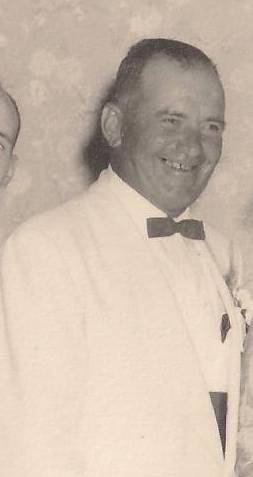
Bridget Agnes Canning
- Born
- 1893-08-15 12:00:00
- Died
- 1953-05-15 12:00:00
- Gender
- Female
- Place of migration
- Migrated to/Born in USA
Bridget Agnes, “Bridgie,” as she was called by her older brother Patrick, was the eighth of nine children born to Francis Canning and Catherine “Kate” Farrell. She was born on the family farm in Drumcoura, Durmreilly (Upper) in County Leitrim on August 15, 1893.
According to the Census of 1901, she was a scholar, attending school in a one room schoolhouse, just a short distance down the road from her family’s farm. By the Census of 1911, she was shown to be 18 years of age, and described as a “farmer’s daughter.” Presumably, she would be no longer in school, and most likely took part in many of the chores needed to run the farm.
In 1919, Bridget left the family farm with the boy down the road, Frank Connolly, and departed for Scotland, though she was seven years his senior. Since Frank was the third son with no prospects on his family’s farm, they went off to Glasgow where he would find work in, what is believed, a power plant. She and Frank were married in St. Andrew’s Cathedral, on the River Clyde, in Glasgow in August of 1919.
There she and Frank added four children to their family: Mary Catherine (Mae), William Francis (Frank), James (Jimmy) and John, all of whom were baptized in that same Cathedral. Sadly, John would pass away at only two weeks of age in 1927. They resided, coincidentally, on Canning Place in Glasgow. Their apartment was adjacent to the gate which led up to the school building that her daughter, Mae, attended and through which she would pass Mae her lunch each day. While the area surrounding Canning Place has subsequently been taken over by one of the Universities in the city, and the street no longer exists, her daughter, Mae, and granddaughter, Eileen, found the area, and discovered that the gate and school building still stand.
Apparently, the family would return to Drumcoura during the summer months for visits. Their oldest daughter, Mae, recalls times spent on the farm, bringing lunch to her uncles in the fields and riding with her grandmother on the cart to take the pig into market.
Sponsored by Bridgie’s older sister, Mary Ellen Rogers, the family emigrated from Scotland to America arriving on January 9, 1928 aboard the SS Caledonia. Due, apparently, to her sickness during the voyage the family was forced to pass through Ellis Island. Her “sickness” was apparently related to her pregnancy with her next son, Alfred Emanuel (Al), who was born in the States on July 4th of that year. (How American is that?) He would be followed later by two more children, Joseph (Joey) and Anna.
From what her granddaughter, Eileen McNulty, can recall from bits she overheard, Bridgie was not happy in America. Their first home there was in a tenement building at 112 118th Street in Manhattan. While Frank started out as a “day laborer” and later as a grave digger in Calvary Cemetery, Bridgie apparently performed some custodial chores in their building, polishing brass and so forth.
Eventually, the family relocated to another tenement apartment at 389 138th Street in the Bronx, where Eileen, a small child at the time, recalls “little bits” about her grandmother. She had an orange cat, named Tizzy, and kept lots of red geraniums out on the fire escape. Later Eileen learned that her father had found the cat, cleaned it up, and gave it to Bridgie. Apparently, her father would pick her up “carton” of beer from the Leitrim House across the street from her apartment, when he would come to visit.
During the Second World War, she would proudly hang her Navy sons’ “white hats” out on the line to dry and looked forward to the end of the war. She said, jokingly, that she would anxiously await their return, so that she could just hold out her apron and have the boys fill it up with money when they returned. They all returned, but each was married soon after, so the apron never got filled!
Bridgie was a fairly short, but stocky person of perhaps 5 foot 1 or 2. Eileen remembers her snow white hair which made her look “very old” in the eyes of a small child of only 8 years of age. Yet, Bridgie was only 60 years of age when she passed away on May 31, 1953. She was hospitalized at the time due to severe abdominal swelling which required “tapping.” It is suspected that Cancer may have caused her death.
Bridgie was laid to rest in Gate of Heaven Cemetery in Westchester, NY. She is buried in Plot 359, Section 47, Grave 10, and would be joined there by her husband Frank in 1967.