
Back to ancestor search
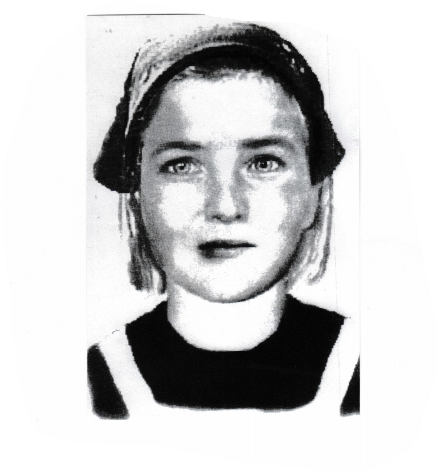
Agnes Boyne/Boynes (nee Lyttle/Little)

Agnes Boyne/Boynes (nee Lyttle/Little)

Born
1820-01-01 12:00:00
Died
1863-06-14 12:00:00
Gender
Female
Place of migration
Migrated to/Born in Australia

CONVICT RECORD

Name: Agnes Boyne.

Date of birth: 1820. 

Native place: Antrim, Ireland.

Individual description:

5 foot 4 & 3/4 inches, light blue eyes, light brown eyebrows and hair, fair complexion, large head & medium high forehead, large visage, medium sized nose, medium sized mouth, round chin, mole on left shoulder.

Occupation before conviction: Laundry maid and Needlewoman.

Crime: Larceny (stealing clothes).

Trial: Convicted and sentenced on 05/04/1843 at Kildare Assizes, Kildare, County Kildare, Ireland

Sentence: Transported for 7 years.

Departure: East London from Dublin, Ireland on 10/05/1843.

Ship/s: East London to Hobart, Van Diemen’s Land. East London was 409 ton and built at Sunderland, England, in 1839. Ship’s Master was James Parley. Ship’s Surgeon was Ed. Caldwell. The route taken was via Madeira. The voyage took 133 days. The ship embarked with 133 female convicts. There were 17 deaths during the voyage and 116 female prisoners were relanded.

Date of arrival: 21/09/1843 in Hobart, Van Diemen’s Land.

Freedom: Granted a ticket -of-leave on 09/07/1849.

Granted permission to marry: ??/02/1845 (Hobart Town Gazette 18/02/1845).

Married: Robert Lowes on 07/04/1845 at St. Luke’s Church, Richmond, Van Diemen’s Land.

Date of death: 14/06/1863.

Place of death: Sorell, Tasmania.

Cause of death: Natural causes.

Date of burial: About the 15/6/1863 

Place of burial: possibly Richmond, Tasmania

Age at death: 43.

Additional: Had been previously charged with larceny and was acquitted. She was a Roman Catholic, married with a child.

Name:Lane, Agnes

Record Type:Deaths

Gender:Male

Age:43

Date of death:14 Jun 1863

Registered:Sorell

Registration year:1863

Record ID:NAME_INDEXES:1204655

Resource: RGD35/1/32 no 492

Associated communities

Antrim

County Antrim, or Aontroim in Irish, is located on the north-east shore of Lough Neagh in Northern Ireland.  It has beautiful rugged landscape and is home to the World Heritage Site, Giant’s Causeway.  Our county town is Antrim town and we have a population of approximately 618,108.

Other ancestors in this community

Buildings in this community

  • Benvarden, Coleraine, 2015

    Location: Antrim

    36 Benvarden Road, Dervock, Ballymoney, County Antrim, Northern Ireland, BT53 6NN

  • 11 Crocus St

    Location: Antrim

    11 Crocus St, Belfast Ireland

  • Carrick-a-Rede Bridge

    Location: Antrim

    Co. Antrim

  • Armoy

    Location: Antrim

Timeline events in this community

  • 1850s

    George McFall

    <p>Occupation</p>

    1857-01-01 12:00:00

  • 1840s

    Robert Curran, Sr. of Portaferry, Co. Down (approx. 1806-1871), wife Catherine (c. 1799-1879, their son Capt. Robert Curran, Jr. of Portaferry, Co. Down (approx. 1836-1890)

    <p>A brief timeline of the Family of Mr. Robert Curran, Sr. a Whitesmith/Blacksmith of Portaferry, Co. Down, his wife Catherine, and their son, Capt. Robert Curran, Jr., also of Portaferry, Co. Down, Ireland.</p>

    1840-01-01 12:00:00

  • 1820s

    McSherry Family (Seafarers, not family of Farmers of same village also named McSherry) of Killough, Co. Down, later of Belfast, c. 1807-1891

    <p>Devout Irish-Catholic Ship Captain, Master Mariner and Pub/Tavern Inn/Hotel Owner Richard McSherry of Killough and Ardglass areas of Eastern County Down (husband of Mary Adair, presumably also from somewhere in County Down), both later moving to Belfast (15 Corporation Square, 20 Gamble Street, 58/60 Tomb Street, and 35/39 Dock Street) all in the Old Sailortown neighborhood) of Belfast, Co. Antrim, Ireland. </p>

    1825-01-01 12:00:00

  • 1840s

    Irish press warns against Jamaican Indentured Servitude

    <p>The theme was always the same: the pestilential climate of the island, the reduction of poor emigrants to slaves, the severity and cruelty of the planters (and planter-dominated Assembly clinging to every vestige of oppression) and, of course, the absence of priests and chapels.</p>

    1840-12-01 12:00:00